×
- Hello
- Login or Register
- Quick Links
- Live Chat
- Track Order
- Parts Availability
- RMA
- Help Center
- Contact Us
- Shop for
- Volkswagen Parts

My Garage
My Account
Cart
Genuine Volkswagen Golf SportWagen Flywheel
Clutch Flywheel- Select Vehicle by Model
- Select Vehicle by VIN
Select Vehicle by Model
orMake
Model
Year
Select Vehicle by VIN
For the most accurate results, select vehicle by your VIN (Vehicle Identification Number).
7 Flywheels found
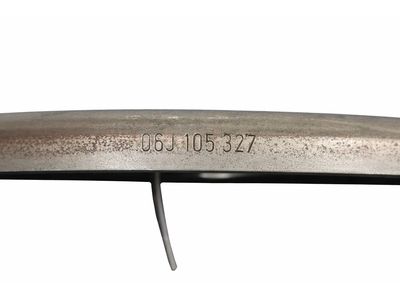
Volkswagen Golf SportWagen Drive Plate Part Number: 06J-105-327
$148.74 MSRP: $208.32You Save: $59.58 (29%)Ships in 1-2 Business Days
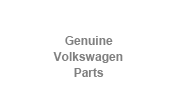
Volkswagen Golf SportWagen Flywheel Part Number: 06J-105-266-AL
$1061.39 MSRP: $1338.45You Save: $277.06 (21%)Ships in 1-2 Business Days
Volkswagen Golf SportWagen Flywheel Part Number: 03C-105-269-AK
$506.29 MSRP: $691.65You Save: $185.36 (27%)Ships in 1-2 Business DaysVolkswagen Golf SportWagen Flywheel Part Number: 03L-105-266-EF
$1067.49 MSRP: $1346.14You Save: $278.65 (21%)Ships in 1-2 Business DaysVolkswagen Golf SportWagen Flywheel Part Number: 06J-105-266-AT
$911.94 MSRP: $1149.98You Save: $238.04 (21%)Ships in 1-2 Business DaysVolkswagen Golf SportWagen Flywheel Part Number: 03L-105-266-CC
$1043.09 MSRP: $1315.37You Save: $272.28 (21%)Ships in 1-2 Business DaysVolkswagen Golf SportWagen Flywheel Part Number: 04L-105-266-B
$1158.99 MSRP: $1461.52You Save: $302.53 (21%)Ships in 1-2 Business Days
Volkswagen Golf SportWagen Flywheel
Choose OEM Flywheel for superior quality and long-lasting durability. They match the Volkswagen's factory specifications exactly and pass strict quality control. If you plan to replace Flywheel on your Golf SportWagen, put OEM at the top of your list. You'll get the right fit, reliable performance, and peace of mind. We stock an extensive inventory of genuine Volkswagen Golf SportWagen parts. It is easy to find what you need. You will love our competitive prices that help you save. No more hassle with returns or guesswork. Every part includes a warranty straight from the manufacturer. Get trusted quality, strong durability, and real value today.
Volkswagen Golf SportWagen Flywheel Parts and Q&A
- Q:What precautions should be taken when replacing flywheel bolts and reinstalling the flywheel/driveplate on Volkswagen Golf SportWagen?A:It is advised by the manufacturer to ensure that the flywheel bolts are replaced whenever they have been removed. In manual transaxle models, take out the transaxle, clutch and make sure to inspect or replace the clutch parts. In the case of the automatic transaxle, remove the automatic transaxle. Mark the flywheel/driveplate and crankshaft with alignment marks with a center punch or paint to make sure they are aligned when reassembled. Take out the bolts holding flywheel/driveplate to the crankshaft, with a screwdriver to stop the crankshaft turning in case, necessary. The flywheel/driveplate is carefully removed together with supporting it (when taking out the final bolt) and the spacers of automatic transaxle vehicles should also be retained with the driveplate. In dual-mass flywheel engines, create alignment marks, rotate the flywheel so that the bolts fit the holes and place a locking tool to hold the flywheel stationary as the bolts are removed. Retoss the bolts and replace them, keeping away air tools and impact drivers to avoid any damage. Clean flywheel with brake system cleaner, inspecting cracks, warping and examine mating surfaces between flywheel/ driveplate and crankshaft, changing crankshaft rear seal when it leaks. Place the flywheel/ driveplate and spacer in contact with the crankshaft, orienting the marks created during removal, and use thread locking compound on the bolts before connecting them to the bolts in a criss-cross fashion to the applicable torque. In the case of cars that have an automatic transaxle, the installed height of the driveplate should be measured at three equal points and shimmed where needed. Installation should be completed by reversing the removal.
Related Volkswagen Golf SportWagen Parts
 Volkswagen Golf SportWagen Automatic Transmission Filter
 Volkswagen Golf SportWagen Automatic Transmission Shift Levers
 Volkswagen Golf SportWagen Clutch Fork
 Volkswagen Golf SportWagen Clutch Master Repair Kit
 Volkswagen Golf SportWagen Clutch Release Bearing
 Volkswagen Golf SportWagen Clutch Slave Cylinder
 Volkswagen Golf SportWagen Clutch Slave Repair Kit
 Volkswagen Golf SportWagen CV Joint Companion Flange
 Volkswagen Golf SportWagen Pressure Plate
 Volkswagen Golf SportWagen Transfer Case Seal
 Volkswagen Golf SportWagen Transmission Assembly
 Volkswagen Golf SportWagen Valve Body