×
- Hello
- Login or Register
- Quick Links
- Live Chat
- Track Order
- Parts Availability
- RMA
- Help Center
- Contact Us
- Shop for
- Volkswagen Parts

My Garage
My Account
Cart
Genuine Volkswagen GTI Camshaft
Cam- Select Vehicle by Model
- Select Vehicle by VIN
Select Vehicle by Model
orMake
Model
Year
Select Vehicle by VIN
For the most accurate results, select vehicle by your VIN (Vehicle Identification Number).
6 Camshafts found
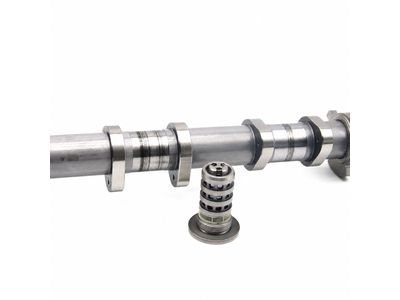
Volkswagen GTI Camshaft Part Number: 06K-109-021
$293.37 MSRP: $400.79You Save: $107.42 (27%)Ships in 1-2 Business Days
Volkswagen GTI Camshaft Part Number: 06K-109-021-M
$259.24 MSRP: $354.15You Save: $94.91 (27%)Ships in 1-2 Business Days
Volkswagen GTI Camshaft Part Number: 06H-109-022-BB
$430.04 MSRP: $587.49You Save: $157.45 (27%)Ships in 1-2 Business Days
Volkswagen GTI Camshaft Part Number: 06K-109-022-R
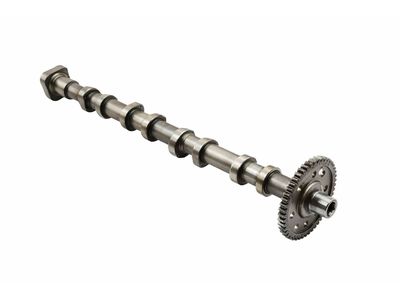
$689.29 MSRP: $869.22You Save: $179.93 (21%)Ships in 1-2 Business DaysVolkswagen GTI Camshaft Part Number: 06H-109-021-K
$1107.14 MSRP: $1396.14You Save: $289.00 (21%)Ships in 1-2 Business Days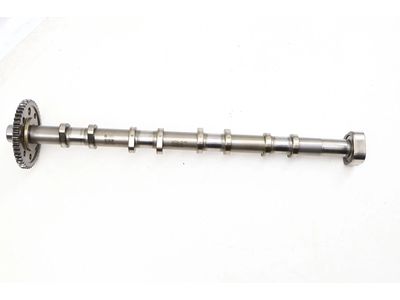
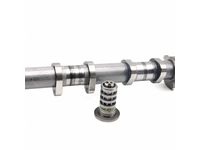
Volkswagen GTI Camshaft Part Number: 06K-109-022-BB
Volkswagen GTI Camshaft
Choose OEM Camshaft for superior quality and long-lasting durability. They match the Volkswagen's factory specifications exactly and pass strict quality control. If you plan to replace Camshaft on your GTI, put OEM at the top of your list. You'll get the right fit, reliable performance, and peace of mind. We stock an extensive inventory of genuine Volkswagen GTI parts. It is easy to find what you need. You will love our competitive prices that help you save. No more hassle with returns or guesswork. Every part includes a warranty straight from the manufacturer. Get trusted quality, strong durability, and real value today.
Volkswagen GTI Camshaft Parts and Q&A
- Q:What precautions should be taken when disconnecting the battery and Cam Gear, Camshaft and Rocker Arm for 4-cylinder engines on Volkswagen GTI?A:When the battery has been disconnected, a number of systems will need to be re-learned until they start operating correctly. In case of mistakes, the engine will suffer serious damages; the process should not be performed by an untrained person in this kind of repair. In case uncertain of capabilities, seek advice of someone with knowledge and ensure that all work is completed before one tries to start the engine. Interim inspection of camshafts and lifters must be done before fitting, and prior to withdrawal of camshafts, endplay inspection must be done. The camshafts may not be pulled out of the camshaft housing on 1.4L (CZTA, DGXA) models, and in the situation of an issue, the camshafts and housing have to be replaced together. Untether the cable on the negative terminal of the battery, empty the cooling system, pull out air filter housing, resonator, take out the water pump, ignition coils, high-pressure fuel pump, and disconnect the electrical connector on different sensors. Disassemble the turbocharger coolant pipes, fasteners of the heat shield, upper cover of the timing belt, and position the engine at TDC. The camshaft housing bolts should be loosened in the reversal order in which they were tightened, and the camshaft housing should then be carefully removed in relation to the Cylinder Head, and all remnants of the gasket sealing compound removed. Cylinder head Mark and remove the roller rocker and lifters as they occur in the cylinder head, making sure that they are re-inserted in their respective positions. In the case of camshaft sprockets, special tools should be used so as not to turn when loosening bolts and installation of new seals should also be done so as to maintain cleanliness. Installation On 2.0L (CBPA) models, proceed the same way, but make sure to align and fit correctly and to use the appropriate torque specification. In 1.8L and 2.0L timing chain models, the camshaft bearings should not be machined, but should be incorporated and have to be followed through the removal and installation steps with care, checking all the marks and alignments. Refilling the cooling system, clean and lubricate all parts, and install in the right sequence and leakage.
Related Volkswagen GTI Parts
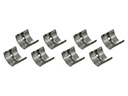 Volkswagen GTI Balance Shaft Bearing
 Volkswagen GTI Crankshaft
 Volkswagen GTI Dipstick
 Volkswagen GTI Engine Oil Cooler
 Volkswagen GTI Intake Valve
 Volkswagen GTI Oil Filler Cap
 Volkswagen GTI Oil Pan Gasket
 Volkswagen GTI Oil Pump
 Volkswagen GTI Transmission Oil Cooler
 Volkswagen GTI Valve Lifter
 Volkswagen GTI Valve Spring Retainer
 Volkswagen GTI Variable Timing Solenoid