×
- Hello
- Login or Register
- Quick Links
- Live Chat
- Track Order
- Parts Availability
- RMA
- Help Center
- Contact Us
- Shop for
- Volkswagen Parts

My Garage
My Account
Cart
Genuine Volkswagen Cabrio Wheel Hub
Wheel Axle Hub- Select Vehicle by Model
- Select Vehicle by VIN
Select Vehicle by Model
orMake
Model
Year
Select Vehicle by VIN
For the most accurate results, select vehicle by your VIN (Vehicle Identification Number).
1 Wheel Hub found
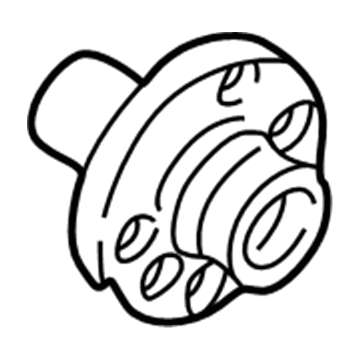
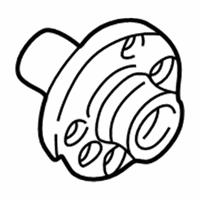
Volkswagen Cabrio Hub Part Number: 357-407-613-B
$255.27 MSRP: $348.74You Save: $93.47 (27%)Ships in 1-2 Business Days
Volkswagen Cabrio Wheel Hub
Choose OEM Wheel Hub for superior quality and long-lasting durability. They match the Volkswagen's factory specifications exactly and pass strict quality control. If you plan to replace Wheel Hub on your Cabrio, put OEM at the top of your list. You'll get the right fit, reliable performance, and peace of mind. We stock an extensive inventory of genuine Volkswagen Cabrio parts. It is easy to find what you need. You will love our competitive prices that help you save. No more hassle with returns or guesswork. Every part includes a warranty straight from the manufacturer. Get trusted quality, strong durability, and real value today.
Volkswagen Cabrio Wheel Hub Parts and Q&A
- Q:How to remove and replace the Wheel Hub, including the bearings and oil seal on Volkswagen Cabrio?A:Start by taking off the rear brake drum or disc. With disc brake models, the lever is removed off the cover ring on the rear of the hub. A flat-bladed screwdriver is used to pry the oil seal out of the back of the hub, keeping track of the way it was installed. Take the bearing away of the drum or disc inside, and make the hub and tap the outer bearing race out of position with a hammer and a punch. Invert the drum or disc, and tap the inner bearing outer race also. Wipe the hub and clean all dirt and grease and polish any burrs or raised spots that may prevent reassembly. Check the hub surface and look at the cracks or wear and change it. Whenever the bearings and oil seal are disturbed, always replace it and the outer races are usually damaged. Get a new set of bearings, an oil seal, and a little amount of special grease, at a VW dealer or used parts shop. When reassembling, a light coat of clean engine oil must be applied to the outside of each bearing race to make it easy to fit in place. Clamp the hub and find the outer bearing outer race, and fully tap it in place using an appropriate tubular spacer that will only touch the outermost race edge. Again turn the drum or disc over and in the same way fit the inner bearing outer race in position, taking a care to get both outer races properly in place and clean. Grease both tapered roller bearings with work and grease outer race before applying a smear on the outside race and then install tapered roller bearing on the outer race of inner bearing. Press the oil seal at the back of the hub with the sealing lip inwards, and until flush with the back of the hub, with a suitable tubular drift as required. In the disc brake models, the new cover ring is pressed all the way on the back of the hub. Lastly, invert the drum or disc, attach the tapered roller bearing to the outer race and attach the toothed washer and then replace the brake drum or disc.
Related Volkswagen Cabrio Parts
 Volkswagen Cabrio ABS Control Module
 Volkswagen Cabrio ABS Pump And Motor Assembly
 Volkswagen Cabrio ABS Sensor
 Volkswagen Cabrio Brake Booster Vacuum Hose
 Volkswagen Cabrio Brake Controller
 Volkswagen Cabrio Brake Dust Shields
 Volkswagen Cabrio Brake Line
 Volkswagen Cabrio Brake Rotor
 Volkswagen Cabrio Hydraulic Hose
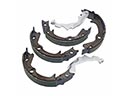 Volkswagen Cabrio Parking Brake Shoes
 Volkswagen Cabrio Spindle Nut
 Volkswagen Cabrio Wheel Cylinder