×
- Hello
- Login or Register
- Quick Links
- Live Chat
- Track Order
- Parts Availability
- RMA
- Help Center
- Contact Us
- Shop for
- Volkswagen Parts

My Garage
My Account
Cart
Genuine Volkswagen Distributor
Ignition Distributor- Select Vehicle by Model
- Select Vehicle by VIN
Select Vehicle by Model
orMake
Model
Year
Select Vehicle by VIN
For the most accurate results, select vehicle by your VIN (Vehicle Identification Number).
15 Distributors found
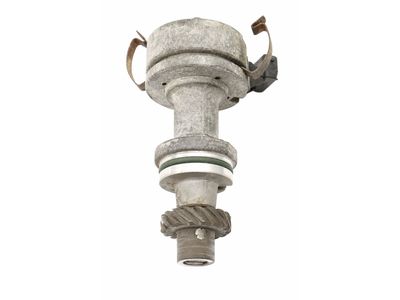
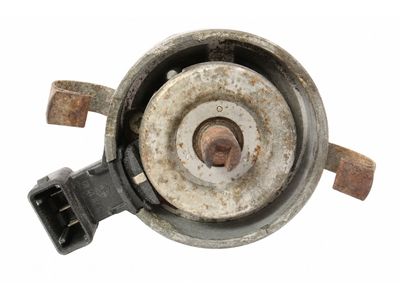
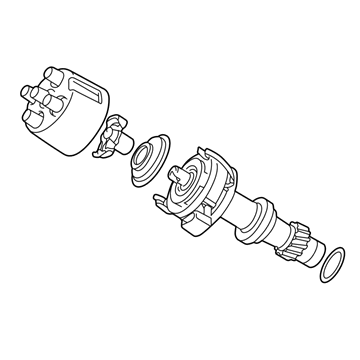
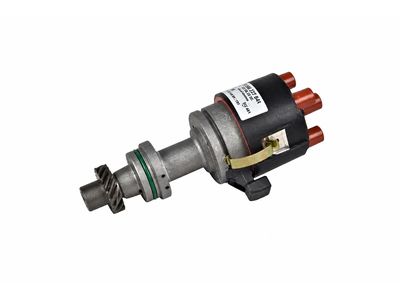
Volkswagen Distributor Part Number: 037-905-205-T
$202.78 MSRP: $284.00You Save: $81.22 (29%)Product Specifications- Other Name: Distributor Assembly
- Replaces: 037-905-205-S
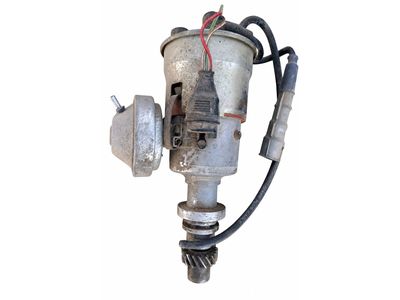
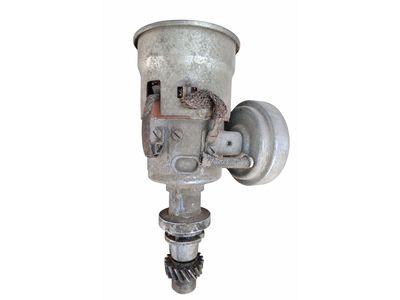
Volkswagen Distributor Part Number: 037-905-237-BX
$129.30 MSRP: $178.88You Save: $49.58 (28%)Product Specifications- Replaces: 037-905-205-R
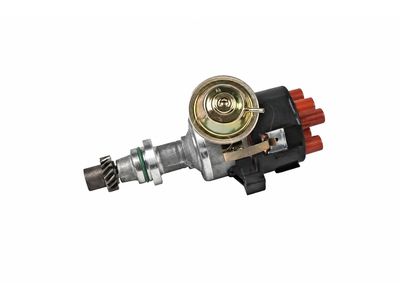
Volkswagen Distributor Part Number: 049-905-205-Q
$327.17 MSRP: $446.95You Save: $119.78 (27%)Product Specifications- Other Name: Distributor Assembly
Volkswagen Distributor Part Number: 027-905-205-Q
$519.72 MSRP: $710.00You Save: $190.28 (27%)Product Specifications- Other Name: Distributor Assembly
Volkswagen Distributor Assembly Part Number: 051-905-237-X
$129.30 MSRP: $178.88You Save: $49.58 (28%)Product Specifications- Other Name: Distributor
- Replaces: 051-905-205-C
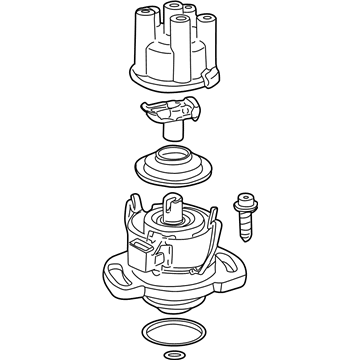
Volkswagen Distributor Part Number: 023-905-237-AX
$229.63 MSRP: $317.20You Save: $87.57 (28%)Product Specifications- Replaces: 023-905-205-C
Volkswagen Distributor Part Number: 023-905-237-X
$262.69 MSRP: $356.00You Save: $93.31 (27%)Product Specifications- Replaces: 023-905-205-B

Volkswagen Distributor Assembly Part Number: 037-905-237-X
$145.85 MSRP: $201.77You Save: $55.92 (28%)Product Specifications- Other Name: Distributor
- Replaces: 037-905-205-K
Volkswagen Distributor Part Number: 025-905-237-X
$248.78 MSRP: $337.00You Save: $88.22 (27%)Product Specifications- Other Name: Distributor Assembly
- Replaces: 025-905-205-AG
Volkswagen Distributor Assembly Part Number: 022-905-205-S
$451.50 MSRP: $616.80You Save: $165.30 (27%)Product Specifications- Other Name: Distributor
Volkswagen Distributor Part Number: 025-905-205-K
$494.10 MSRP: $675.00You Save: $180.90 (27%)Product Specifications- Other Name: Distributor Assembly
Volkswagen Distributor Part Number: 034-905-205-F
$519.72 MSRP: $710.00You Save: $190.28 (27%)Product Specifications- Other Name: Distributor Assembly
Volkswagen Distributor Assembly Part Number: 026-905-237-X
$401.38 MSRP: $542.60You Save: $141.22 (27%)Product Specifications- Other Name: Distributor
- Replaces: 026-905-205-AH
Volkswagen Distributor Part Number: 048-905-237-X
Volkswagen Distributor Part Number: 021-905-237-X
Product Specifications- Other Name: Distributor Assembly
- Replaces: 021-905-205-AF
Volkswagen Distributor
Volkswagen Distributor delivers timely high voltage spark to every cylinder, giving the brand its signature steady idle and lively throttle response. From the early Beetle to the futuristic ID.4, VW builds cars that mix friendly styling, rock solid engineering, and clever tech that keeps everyday driving fun. The company uses punchy TSI turbo engines, the flexible MQB platform, and digital cockpit displays that feel as intuitive as a smartphone. Park assist helps drivers slip into tight city spots, while emerging electric models show its leading the shift toward clean mobility. VW also focuses on simple, ergonomic cabins so families, commuters, and road-trip lovers all feel at home behind the wheel. Matching that brand wide commitment to reliability, the classic Distributor unit sits at the heart of many gasoline engines in the lineup. This compact assembly spins with the camshaft, lets a rotor route coil energy to each plug in the correct firing order, and employs centrifugal and vacuum advance to match spark timing to throttle demand. Later versions swap old breaker points for a Hall sensor and an ignition module, which sharpens spark strength and slashes maintenance without changing the familiar cap and rotor layout. Because the Distributor keeps combustion orderly, VW engines maintain pep, fuel economy, and easy cold starts well past high mileage.
Buying OEM parts is a smart move to keep your long-term repair costs low. These components are built to last because VW uses such strict factory standards. At VWPartsGiant.com, it is easy to find genuine Volkswagen Distributor at prices that actually beat the competition. You get a real manufacturer's warranty with every single part, so you know your purchase is safe. Plus, forget about return headaches since our policy is easy and worry-free. We ship your order fast, too. If you have questions, our team of parts experts is ready to help. Why wait? Start shopping now!
Volkswagen Distributor Parts and Q&A
- Q:How to remove and install a distributor on Volkswagen Cabrio?A:In order to eliminate the distributor, detach the battery negative cable first making sure that it is not touching the terminal and carry an appropriate activation code to any anti-theft system. TDC the engine on cylinder No 1 and, as required, disconnect the four spark plug wires and so the coil wire of the distributor cap, and label them to be later fitted. Unscrew the distributor electrical connector and remove the screws that are in the distributor shield (where applicable) and unplug the electrical connector of the Hall sensor in the distributor body. To install the distributor cap, unscrew or pry off the retaining clips until the distributor cap is lifted off making sure that the rotor electrode fits into the cylinder No 1 marking on the distributor body. Label the relationship between the distributor body and the drive gear case flange with arrows and then loosen and release the bolt to lift off the clamp plate and remove the distributor body off the cylinder block and reclaim the O-ring seal. Look at the O-ring seal(s) and verify wear or damage and replace where necessary and look at the teeth of the distributor drive gear and verify wear or damage, replace the distributor is worn or chipped. To install, ensure that the engine is still in TDC in cylinder No 1. In the case of a 1.8L engine, the tube of the oil pump shaft drive should be aligned with the threaded hole adjacent to the distributor aperture and in the case of a 2.0L engine, aligned with the crankshaft axis. Install the distributor, loosely fasten the clamp plate and the bolt and turn the shaft about a little to fit into the intermediate shaft drive gear, matching the marks created during removal. The rotor electrode is required to be facing directly at the No 1 cylinder mark on the distributor body; the distributor clamp bolt needs to be tightened to a given torque and the alignment of the intermediate shaft sprocket may need to be checked. Install the distributor cap with clips or screws and reconnect the Hall sensor cabling, and install the distributor shield (where applicable) fastened. Install the coil wire by connecting the spark plug wires so as to follow the firing order of 1-3-4-2 and then place the coil wire between the coil and center terminal on the distributor cap. In the case of a 1.8L engine, check the ignition timing, and adjust to the required level.
- Q:What should be done if the distributor components are worn and require maintenance on Volkswagen Transporter?A:Provided the component parts are kept in good order, there should be little need to take the distributor apart except in cases of neglect or very high mileages, indicated by difficulty in setting the measured gap of the contact points accurately and consistently, often due to wear of the shaft or bushes. When wear occurs, movement can be felt when sideways rocking pressure is applied to the top of the shaft. The only solution is to remove the distributor and renew the shaft, or alternatively, renew the whole assembly, ensuring that the necessary parts are available. After removing the distributor, take out the contact points, then remove the driving collar from the bottom of the shaft, noting the orientation of the driving dogs in relation to the rotor arm notch. Clamp the collar in a vice, punch out the retaining pin, and draw off the collar along with the shims controlling the endfloat of the shaft. Carefully unhook the pull rod from the vacuum unit to the contact breaker mounting plate, remove the screws, and take off the vacuum unit, followed by the mounting plate and shaft, noting the position of the thrust washers. If the shaft is badly worn, it must be renewed, but check that the bushes in the distributor are not also worn; if they are, the whole distributor should be replaced. If the shaft and bushes are worn, it is likely that the springs and anchor posts of the centrifugal advance mechanism are also tired, so replacing all components is advisable. Avoid washing the bushes in paraffin or other solvents and ensure they are well lubricated before reassembly. New distributor shafts may require a variation in the thickness of the shims fitted between the driving dog and the body. Reassembly involves reversing the dismantling procedure, ensuring the driving dog is fitted correctly, and peening the ends of the pin to prevent it from dropping out.
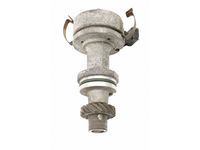
Related Volkswagen Parts
 Volkswagen Ignition Coil
 Volkswagen Camshaft Position Sensor
 Volkswagen Crankshaft Position Sensor
 Volkswagen Spark Plug
 Volkswagen Glow Plug
 Volkswagen Knock Sensor
 Volkswagen Oil Pressure Gauge
 Volkswagen Distributor Rotor
 Volkswagen Engine Control Module
 Volkswagen Horn Relay
 Volkswagen Spark Plug Wire
 Volkswagen Temperature Sender