×
- Hello
- Login or Register
- Quick Links
- Live Chat
- Track Order
- Parts Availability
- RMA
- Help Center
- Contact Us
- Shop for
- Volkswagen Parts

My Garage
My Account
Cart
Genuine Volkswagen GTI Ignition Coil
Ignition Coil Resistor- Select Vehicle by Model
- Select Vehicle by VIN
Select Vehicle by Model
orMake
Model
Year
Select Vehicle by VIN
For the most accurate results, select vehicle by your VIN (Vehicle Identification Number).
3 Ignition Coils found
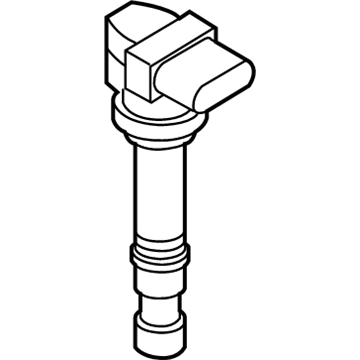
Volkswagen GTI Ignition Coil Part Number: 07K-905-715-G
$65.44 MSRP: $91.65You Save: $26.21 (29%)Ships in 1-2 Business Days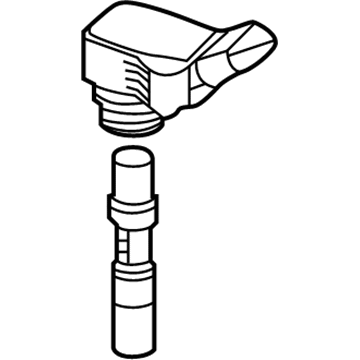
Volkswagen GTI Ignition Coil Part Number: 06L-905-110-K
$71.39 MSRP: $99.98You Save: $28.59 (29%)Ships in 1-2 Business Days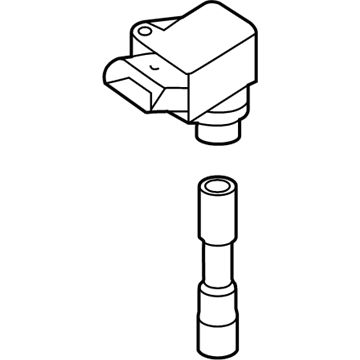
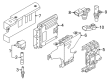
Volkswagen GTI Ignition Coil Part Number: 06H-905-110-P
$74.96 MSRP: $104.98You Save: $30.02 (29%)Ships in 1-2 Business Days
Volkswagen GTI Ignition Coil
Choose OEM Ignition Coil for superior quality and long-lasting durability. They match the Volkswagen's factory specifications exactly and pass strict quality control. If you plan to replace Ignition Coil on your GTI, put OEM at the top of your list. You'll get the right fit, reliable performance, and peace of mind. We stock an extensive inventory of genuine Volkswagen GTI parts. It is easy to find what you need. You will love our competitive prices that help you save. No more hassle with returns or guesswork. Every part includes a warranty straight from the manufacturer. Get trusted quality, strong durability, and real value today.
Volkswagen GTI Ignition Coil Parts and Q&A
- Q:What precautions should be taken when disconnecting the battery and removing ignition coils on Volkswagen GTI?A:If the battery is disconnected, several systems must be re-learned before they will work properly. For all engines, start by disconnecting the cable from the negative battery terminal and removing the engine cover or air filter housing. For 1.4L, 1.8L, and 2.0L turbocharged engines, remove the air filter housing lid or any air intake duct work to access the coils, then remove the nuts and ground cables from the coil mounting fasteners. Disconnect the coil electrical connectors and remove the coil fasteners, using a prybar or similar tool to carefully pry the ignition coil from the valve cover and spark plug. Apply a little silicone dielectric compound to the inside of the spark plug boot before installing the coil, with installation being the reverse of removal. For the 2.0L non-turbocharged engine, mark the location of the spark plug wires and disconnect them from the coil terminals, then disconnect the electrical connector from the coil, remove the bolts securing the coil, and apply silicone dielectric compound to the inside of the spark plug wire boot before installation. For all other engines, on four-cylinder engines, remove the ignition coil harness fasteners, and on five-cylinder engines, disconnect the electrical connector from the ignition coils by depressing the tabs. For four-cylinder engines, pull the coils up about an inch, disconnect all electrical connectors from the coils, and pull the harness and connectors away as a unit. Using special tool #T40039, slide the tool into the top slot of the coil and pull it up approximately 1-1/4 inches; if the tool is not available, use two flat blade screwdrivers or a trim panel tool to carefully pry the ignition coil up. Grasp the ignition coil firmly and pull it straight up, then apply a little silicone dielectric compound to the inside of the spark plug boot before installing the coil, with installation being the reverse of removal.
Related Volkswagen GTI Parts
 Volkswagen GTI Speedometer
 Volkswagen GTI Dimmer Switch
 Volkswagen GTI Hazard Warning Switch
 Volkswagen GTI Knock Sensor
 Volkswagen GTI MAP Sensor
 Volkswagen GTI Oxygen Sensor
 Volkswagen GTI Spark Plug
 Volkswagen GTI Speed Sensor
 Volkswagen GTI Tachometer
 Volkswagen GTI Temperature Sender
 Volkswagen GTI Turn Signal Switch
 Volkswagen GTI Vehicle Speed Sensor
Browse by Year
2025 Ignition Coil 2024 Ignition Coil 2023 Ignition Coil 2022 Ignition Coil 2021 Ignition Coil 2020 Ignition Coil 2019 Ignition Coil 2018 Ignition Coil 2017 Ignition Coil 2016 Ignition Coil 2015 Ignition Coil 2014 Ignition Coil 2013 Ignition Coil 2012 Ignition Coil 2011 Ignition Coil 2010 Ignition Coil 2009 Ignition Coil 2008 Ignition Coil 2007 Ignition Coil 2006 Ignition Coil