×
- Hello
- Login or Register
- Quick Links
- Live Chat
- Track Order
- Parts Availability
- RMA
- Help Center
- Contact Us
- Shop for
- Volkswagen Parts

My Garage
My Account
Cart
Genuine Volkswagen Transporter Piston
Engine Pistons- Select Vehicle by Model
- Select Vehicle by VIN
Select Vehicle by Model
orMake
Model
Year
Select Vehicle by VIN
For the most accurate results, select vehicle by your VIN (Vehicle Identification Number).
1 Piston found
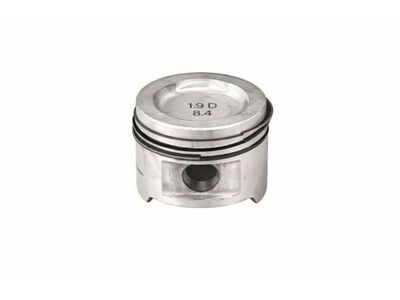
Volkswagen Transporter Piston Part Number: 025-107-111-D-001
$86.08 MSRP: $120.57You Save: $34.49 (29%)
Volkswagen Transporter Piston
Choose OEM Piston for superior quality and long-lasting durability. They match the Volkswagen's factory specifications exactly and pass strict quality control. If you plan to replace Piston on your Transporter, put OEM at the top of your list. You'll get the right fit, reliable performance, and peace of mind. We stock an extensive inventory of genuine Volkswagen Transporter parts. It is easy to find what you need. You will love our competitive prices that help you save. No more hassle with returns or guesswork. Every part includes a warranty straight from the manufacturer. Get trusted quality, strong durability, and real value today.
Volkswagen Transporter Piston Parts and Q&A
- Q:What steps should be taken for proper piston and piston ring maintenance during cylinder removal on Volkswagen Transporter?A:When the Cylinder Heads are removed it is possible to draw off the cylinders, after marking first their positions when off the pistons. The piston and rings should be examined after being removed to ensure that they are not damaged and the pistons should be oriented correctly when turning the crankshaft to avoid foul-up. Piston rings may be removed by sprinkling their ends and pulling them out of grooves. To disengage the piston with the connecting rod, the circlip is to be removed off the piston boss, and the gudgeon pin forced out, any obstruction being encountered it is worth warming the piston. The pistons are to be labelled to be installed again, with the number of cylinder and the facing side marked. Piston wear and cylinder bore wear may contribute to unreasonable use of oil and engine noise, which impact power output. The fact that the gaps between the piston rings could be measured may give an indication of whether new rings are required or not in case they surpassed the stipulated rules. The level of wear on pistons and cylinders must be evaluated simultaneously because in some cases, it is only the pistons that are to be replaced. The initial check of cylinder wear may be made with the help of the touch of ridges and the measurements with the tools. In the case of a uniform bore cylinder, new pistons can be used, however a more common and cost effective option when replacing pistons is a reboring. Besides, it is important to check the clearance of the piston ring side, where the excess of its wear may lead to a piston change. The cylinder should be rebored twice after which new ones should be put in place.
Related Volkswagen Transporter Parts
 Volkswagen Transporter Camshaft
 Volkswagen Transporter Camshaft Seal
 Volkswagen Transporter Cylinder Head
 Volkswagen Transporter Exhaust Valve
 Volkswagen Transporter Intake Valve
 Volkswagen Transporter Oil Filter
 Volkswagen Transporter Pushrod
 Volkswagen Transporter Rocker Arm
 Volkswagen Transporter Thermostat Housing