×
- Hello
- Login or Register
- Quick Links
- Live Chat
- Track Order
- Parts Availability
- RMA
- Help Center
- Contact Us
- Shop for
- Volkswagen Parts

My Garage
My Account
Cart
Genuine Volkswagen Axle Beam
Rigid Axle- Select Vehicle by Model
- Select Vehicle by VIN
Select Vehicle by Model
orMake
Model
Year
Select Vehicle by VIN
For the most accurate results, select vehicle by your VIN (Vehicle Identification Number).
44 Axle Beams found
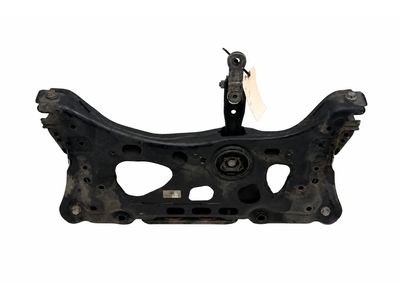
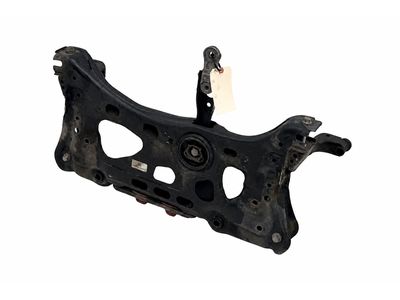
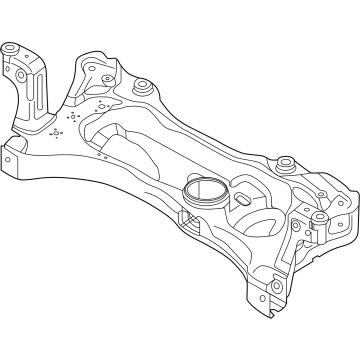
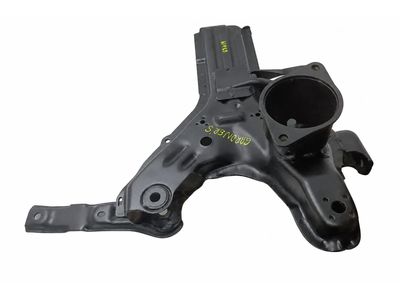
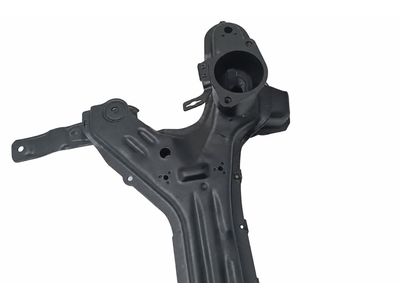
Volkswagen Engine Cradle Part Number: 5QM-199-315-A
$1152.89 MSRP: $1453.84You Save: $300.95 (21%)Ships in 1-2 Business DaysProduct Specifications- Other Name: Sub Frame; Crossmember, Suspension Crossmember
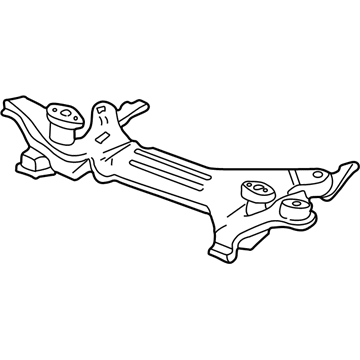
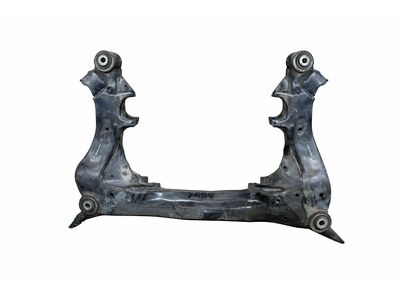
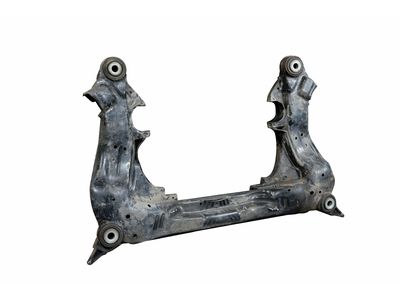
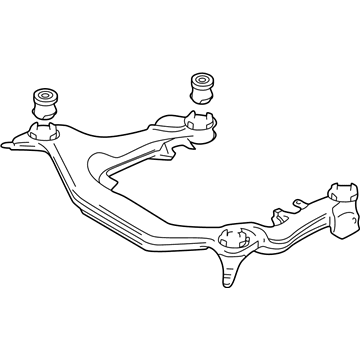
Volkswagen Engine Cradle Part Number: 1H0-199-315-AA
$472.75 MSRP: $645.83You Save: $173.08 (27%)Product Specifications- Other Name: Sub Frame; Subframe, Suspension Crossmember
- Replaces: 1H0-199-315-S, 1H0-199-315-J, 1H0-199-315-R, 1H0-199-315-H, 1H0-199-315-T
Volkswagen Engine Cradle Part Number: 4B0-399-313-DG
$637.57 MSRP: $804.00You Save: $166.43 (21%)Ships in 1-2 Business DaysProduct Specifications- Other Name: Sub Frame
- Replaces: 4B0-399-313-CH
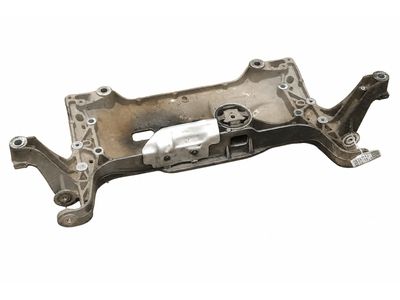
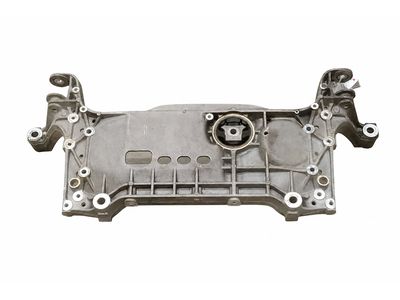
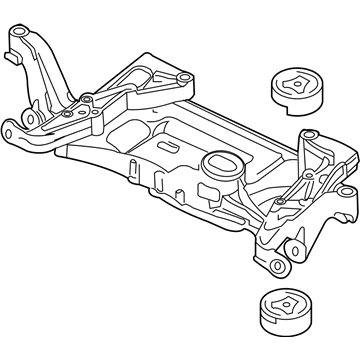
Volkswagen Engine Cradle Part Number: 3C0-199-313-P
$716.74 MSRP: $903.83You Save: $187.09 (21%)Ships in 1-2 Business DaysProduct Specifications- Other Name: Sub Frame; Crossmember
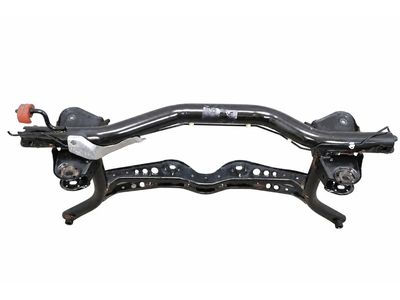
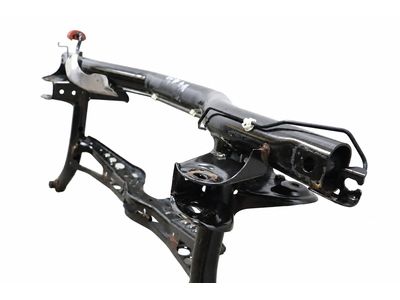
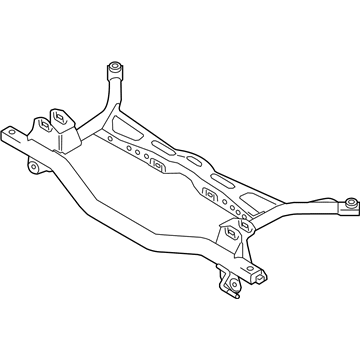
Volkswagen Crossmember Part Number: 561-505-315-F
$780.79 MSRP: $984.60You Save: $203.81 (21%)Ships in 1-2 Business DaysProduct Specifications- Other Name: Sub Frame; Suspension Crossmember
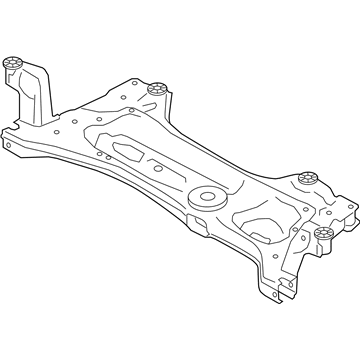
Volkswagen Crossmember Part Number: 3QF-199-315-G
$1223.04 MSRP: $1432.13You Save: $209.09 (15%)Ships in 1-2 Business DaysProduct Specifications- Other Name: Sub Frame; Suspension Crossmember
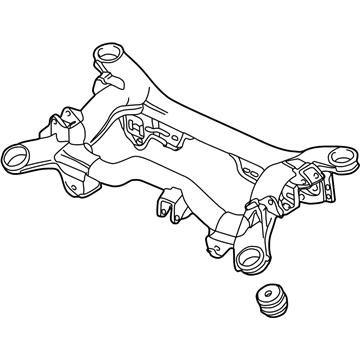
Volkswagen Crossmember Part Number: 8E0-505-235-BK
$934.15 MSRP: $1178.00You Save: $243.85 (21%)Ships in 1-2 Business DaysProduct Specifications- Other Name: Sub Frame; Suspension Crossmember
- Replaces: 8E0-505-235-AN, 8E0-505-235-AL, 8E0-505-235-S
Volkswagen Engine Cradle Part Number: 4B0-399-313-BA
$381.24 MSRP: $520.82You Save: $139.58 (27%)Ships in 1-2 Business DaysProduct Specifications- Other Name: Sub Frame
Volkswagen Crossmember Part Number: 561-505-315-B
$382.84 MSRP: $523.00You Save: $140.16 (27%)Ships in 1-2 Business DaysProduct Specifications- Other Name: Sub Frame
- Replaces: 561-505-315-A, 561-505-315
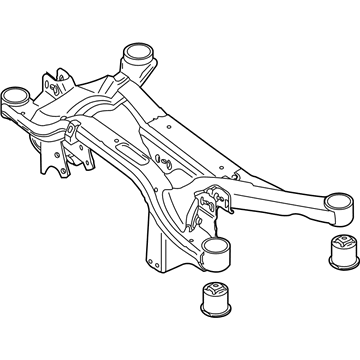
Volkswagen Crossmember Part Number: 3C0-505-235-S
$435.95 MSRP: $595.57You Save: $159.62 (27%)Ships in 1-2 Business DaysProduct Specifications- Other Name: Sub Frame; Suspension Crossmember
- Replaces: 3C0-505-235-L
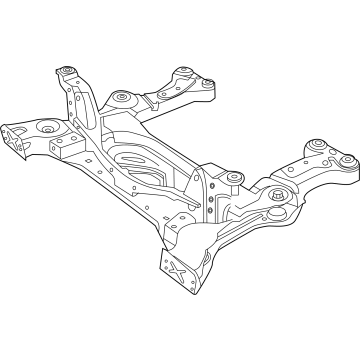
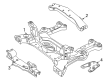
Volkswagen SUB FRAME Part Number: 1N3-199-315-F
$451.39 MSRP: $616.65You Save: $165.26 (27%)Ships in 1-2 Business DaysProduct Specifications- Other Name: Suspension Crossmember
- Replaces: 1N3-199-315-E
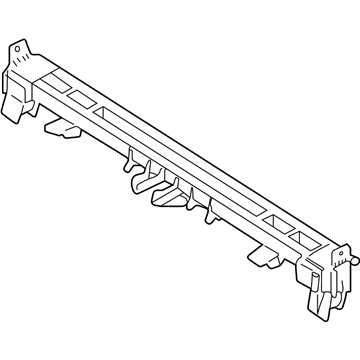
Volkswagen Crossmember Part Number: 701-803-181-F
$502.66 MSRP: $686.70You Save: $184.04 (27%)Ships in 1-2 Business DaysProduct Specifications- Other Name: Member; Front Crossmember
Volkswagen Engine Cradle Part Number: 3C0-199-313-S
$601.06 MSRP: $821.12You Save: $220.06 (27%)Ships in 1-2 Business DaysProduct Specifications- Other Name: Sub Frame; Crossmember
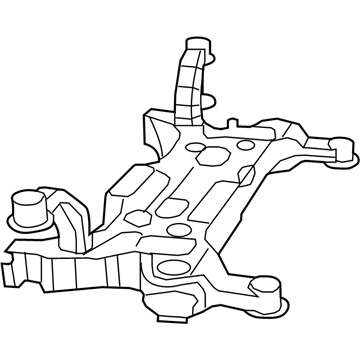
Volkswagen Crossmember Part Number: 7B0-499-030-D
$732.51 MSRP: $1000.70You Save: $268.19 (27%)Ships in 1-2 Business DaysProduct Specifications- Other Name: Sub Frame; Suspension Crossmember
- Replaces: 7B0-499-030-B, 7B0-499-030, 7B0-499-030-A, 7B0-499-030-C
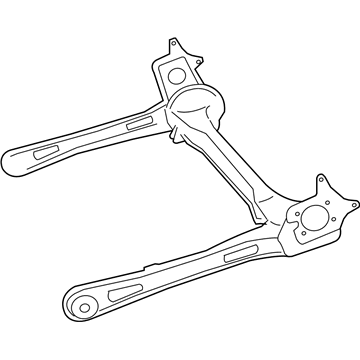
Volkswagen Crossmember Part Number: 7B0-500-051-F
$830.09 MSRP: $1134.00You Save: $303.91 (27%)Ships in 1-2 Business DaysProduct Specifications- Other Name: Rear Axle; Axle Beam
- Replaces: 7B0-500-051-B, 7B0-500-051-C, 7B0-500-051, 7B0-500-051-A, 7B0-500-051-D, 7B0-500-051-E
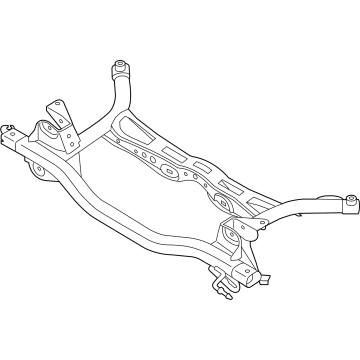
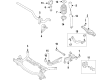
Volkswagen Crossmember Part Number: 5QM-505-315-D
$616.09 MSRP: $776.91You Save: $160.82 (21%)Ships in 1-2 Business DaysProduct Specifications- Other Name: Sub Frame; Suspension Crossmember
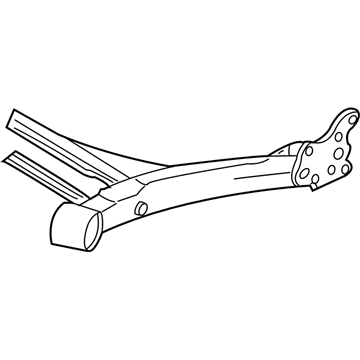
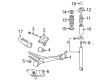
Volkswagen Crossmember Part Number: 1J0-500-045
$753.35 MSRP: $950.00You Save: $196.65 (21%)Ships in 1-2 Business DaysProduct Specifications- Other Name: Rear Axle; Axle Assembly, Axle Beam
Volkswagen Engine Cradle Part Number: 4B0-399-313-DK
$780.80 MSRP: $984.61You Save: $203.81 (21%)Ships in 1-2 Business DaysProduct Specifications- Other Name: Sub Frame
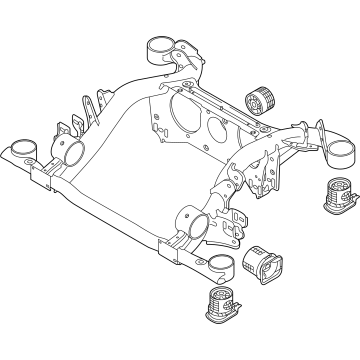
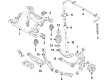
Volkswagen Sub Frame Part Number: 1EA-505-235-BQ
$802.14 MSRP: $1011.53You Save: $209.39 (21%)Ships in 1-2 Business DaysProduct Specifications- Other Name: Crossmember, Suspension Crossmember
- Replaced by: 1EA-505-235-CC
- Replaces: 1EA-505-235-BB, 1EA-505-235-BC, 1EA-505-235-AR, 1EA-505-235-BE, 1EA-505-235-AT
Volkswagen Engine Cradle Part Number: 4B0-399-313-CT
$816.18 MSRP: $1029.23You Save: $213.05 (21%)Ships in 1-2 Business DaysProduct Specifications- Other Name: Sub Frame
- Replaces: 8D0-399-313-BL, 4B0-399-313-AS
| Page 1 of 3 |Next >
1-20 of 44 Results
Volkswagen Axle Beam
The Volkswagen Axle Beam connects the back wheels with a rigid weight-bearing bar that maintains accurate alignment and allows all VWs to be kept steady over bumps and deliver power smoothly to the tires to make drivers feel assured in their daily traffic and on long trips. Strong steel construction, careful geometry, and well-sealed bearings ensure the Axle Beam resists twisting and wear, which along with low noise can be equipped with optional traction aids to balance grip between left and right wheels to keep handling predictable throughout the full VW range. Lightweight design helps reduce unsprung mass, allowing the suspension to respond rapidly for a softer ride without losing the sporty feedback, and the part fits neatly into modular platforms, making future upgrades easy. Just like this component is the basis of stability, the brand as a whole represents smart engineering that makes advanced tech friendly and reliable. From the original idea of the people car in Wolfsburg to the ID electric line today, the brand combines utilitarian shapes with well-defined styling and offers many of its models on the adaptable MQB base, keeping costs honest and quality high. Turbocharged TSI engines, direct fuel injection, digital cockpits, and park assist systems demonstrate how VW packs useful innovation into vehicles that feel familiar to new drivers. With clear infotainment menus, robust build, and a culture of constant improvement, VW cars command trust in cities, suburbs, and winding country roads alike.
Buying OEM parts is a smart move to keep your long-term repair costs low. These components are built to last because VW uses such strict factory standards. At VWPartsGiant.com, it is easy to find genuine Volkswagen Axle Beam at prices that actually beat the competition. You get a real manufacturer's warranty with every single part, so you know your purchase is safe. Plus, forget about return headaches since our policy is easy and worry-free. We ship your order fast, too. If you have questions, our team of parts experts is ready to help. Why wait? Start shopping now!
Volkswagen Axle Beam Parts and Q&A
- Q:How to remove and install the rear axle beam on Volkswagen Jetta?A:Loose the bolts of the rear wheel, raise the rear part of the vehicle and place it firmly on jackstands with the front wheels blocked to avoid rolling. Take off the rear wheels, undo the parking brake and undo the parking brake adjustment nut till the cables may be pulled off the brake cable equalizer. Unplug the rear wheel speed sensors and take away the coil springs. Raise the axle beam with a floor jack until the crossbrace is parallel to the floor, and then loosen the crossbrace-to-rear axle attaching bolts and looseness and detach the crossbrace and rear axle. Remove the clips connecting the rear axle and the brake lines on both sides and unconnect them. Unscrew the rear axle bracket mounting fasteners on the right and only the through-bolt nut on the left, remembering to note the various lengths of the rear axle mounting bracket fasteners to be installed. Take out the rear shock absorber-to-rear axle fasteners and loosen the rear axle of the vehicle. To install, remove in opening sequence, tighten all suspension fasteners that pass through rubber bushings to the required torque at ride height, use new fasteners, do not lighten up the rear axle mounting fasteners until the wheel suspended is raised to simulated ride height, bleed the brakes, and tighten the wheel bolts to the needed torque and have the rear wheel alignment verified and if necessary adjusted.
Related Volkswagen Parts
 Volkswagen Bump Stop
 Volkswagen Coil Springs
 Volkswagen Camber and Alignment Kit
 Volkswagen Differential Seal
 Volkswagen Radius Arm
 Volkswagen Spindle
 Volkswagen Strut Bearing
 Volkswagen Strut Housing
 Volkswagen Sway Bar Bracket
 Volkswagen Sway Bar Link
 Volkswagen Sway Bar Link Bushing
 Volkswagen Trailing Arm Bushing
Browse by Model
Arteon Axle Beam Atlas Axle Beam Atlas Cross Sport Axle Beam Beetle Axle Beam Cabrio Axle Beam CC Axle Beam Eos Axle Beam EuroVan Axle Beam Golf Alltrack Axle Beam Golf Axle Beam Golf R Axle Beam Golf SportWagen Axle Beam GTI Axle Beam ID. Buzz Axle Beam ID.4 Axle Beam Jetta Axle Beam Passat Axle Beam Phaeton Axle Beam R32 Axle Beam Rabbit Axle Beam Routan Axle Beam Taos Axle Beam Tiguan Axle Beam Tiguan Limited Axle Beam