×
- Hello
- Login or Register
- Quick Links
- Live Chat
- Track Order
- Parts Availability
- RMA
- Help Center
- Contact Us
- Shop for
- Volkswagen Parts

My Garage
My Account
Cart
Genuine Volkswagen Cabrio Fuel Injector
Gas Injector- Select Vehicle by Model
- Select Vehicle by VIN
Select Vehicle by Model
orMake
Model
Year
Select Vehicle by VIN
For the most accurate results, select vehicle by your VIN (Vehicle Identification Number).
1 Fuel Injector found
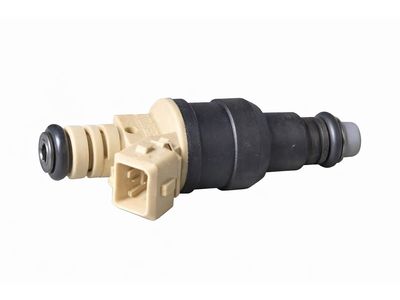
Volkswagen Cabrio Injector Part Number: 037-906-031-J
$130.90 MSRP: $183.33You Save: $52.43 (29%)Ships in 1-2 Business Days
Volkswagen Cabrio Fuel Injector
Choose OEM Fuel Injector for superior quality and long-lasting durability. They match the Volkswagen's factory specifications exactly and pass strict quality control. If you plan to replace Fuel Injector on your Cabrio, put OEM at the top of your list. You'll get the right fit, reliable performance, and peace of mind. We stock an extensive inventory of genuine Volkswagen Cabrio parts. It is easy to find what you need. You will love our competitive prices that help you save. No more hassle with returns or guesswork. Every part includes a warranty straight from the manufacturer. Get trusted quality, strong durability, and real value today.
Volkswagen Cabrio Fuel Injector Parts and Q&A
- Q:How can Fuel Injectors be properly tested, removed, and replaced after prolonged use on Volkswagen Cabrio?A:The injectors may wear out over time, and will need reconditioning or replacement on average after 60000 miles (100000 km). A specialist should do accurate testing, overhaul and calibration. To determine a faulty injector that results in the production of a knock or smoke, then start the engine at a fast idle and loosen each injector connection one by one with a rag (be sure not to get any of the spray on the skin) the knocking or smoke will stop once the fitting of the faulty injector has been loosened. The removal process must avoid the entry of dirt to injectors or fuel lines and caution should be taken not to spill the injectors or damage the precision tips. Start by disconnection of the negative lead of the battery and cover the alternator to prevent spillage of fuel. When the stereo of the vehicle has an anti-theft mechanism, be sure that the activation code is not lost when removing the battery. Wipe around injectors and the line fitting nuts and detach the return line off the injector. Wipe the line fittings then loosen the fitting nuts that anchor the injector lines and the lines to the back of the injection pump but leave that adapter in place with an adequate wrench so that it does not unscrew out of the pump. Take out the injector lines as a single unit and it should contain the injector and the line fittings to keep dirt out and the cut fingertips of an old rubber glove with elastic bands should be used over the open fittings. Using a deep socket or box wrench, unscrew the injector, take it off the cylinder head and retrieve the heat shield washer. To install, screw a new heat shield washer on the cylinder head with the convex part downwards, then screw injector and screw it to a given torque. Install the injector lines, screw the fitting nuts to the required torque requirements and renegotiate any clamps as indicated before their removal. Safely re-attach the injector connection to the return line, re-connect the battery and test the engine.
Related Volkswagen Cabrio Parts
 Volkswagen Cabrio Air Duct
 Volkswagen Cabrio Air Filter
 Volkswagen Cabrio Air Filter Box
 Volkswagen Cabrio Air Intake Hose
 Volkswagen Cabrio Coolant Temperature Sensor
 Volkswagen Cabrio Fuel Pressure Regulator
 Volkswagen Cabrio Fuel Pump
 Volkswagen Cabrio Fuel Rail
 Volkswagen Cabrio Intake Manifold
 Volkswagen Cabrio Mass Air Flow Sensor
 Volkswagen Cabrio Throttle Body
 Volkswagen Cabrio Throttle Body Gasket