×
- Hello
- Login or Register
- Quick Links
- Live Chat
- Track Order
- Parts Availability
- RMA
- Help Center
- Contact Us
- Shop for
- Volkswagen Parts

My Garage
My Account
Cart
Genuine Volkswagen Cabrio Piston
Engine Pistons- Select Vehicle by Model
- Select Vehicle by VIN
Select Vehicle by Model
orMake
Model
Year
Select Vehicle by VIN
For the most accurate results, select vehicle by your VIN (Vehicle Identification Number).
2 Pistons found
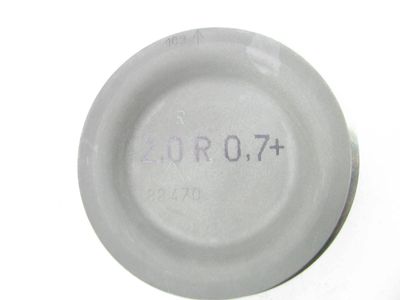
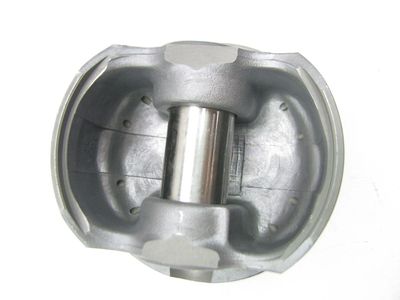
Volkswagen Cabrio Piston Part Number: 037-107-065-N
$278.16 MSRP: $380.00You Save: $101.84 (27%)Ships in 1-2 Business Days
Volkswagen Cabrio Pistons Part Number: 037-107-065-M
$128.52 MSRP: $180.00You Save: $51.48 (29%)
Volkswagen Cabrio Piston
Choose OEM Piston for superior quality and long-lasting durability. They match the Volkswagen's factory specifications exactly and pass strict quality control. If you plan to replace Piston on your Cabrio, put OEM at the top of your list. You'll get the right fit, reliable performance, and peace of mind. We stock an extensive inventory of genuine Volkswagen Cabrio parts. It is easy to find what you need. You will love our competitive prices that help you save. No more hassle with returns or guesswork. Every part includes a warranty straight from the manufacturer. Get trusted quality, strong durability, and real value today.
Volkswagen Cabrio Piston Parts and Q&A
- Q:How to remove and reassemble the piston, cylinder head, flywheel, oil pan, baffle plate, oil pump, and pickup on Volkswagen Cabrio?A:It is necessary to remove the Cylinder Head, flywheel, oil pan, baffle plate, oil pump, and pickup, but when starting at the cylinder bores tops, always inspect to see that there are not wear ridges that can cause the damage of the piston. Mark each piston crown with the number of that piston so that you can identify it, No 1 at timing belt end. Using feeler gauges measure the thrust clearance of each connecting rod and tabulate the results. Depending on the case, loosen the retaining screw, and squeegee the piston cooling jets out, moving carefully not to damage any pressure relief valves. Turn the crankshaft until the bottom dead center occurs with pistons No 1 and 4, marking the bearing caps and connecting rods with their corresponding piston numbers, and drawing alignment arrows to aid reassembling. Carefully unbolt the bearers cap bolts/nuts and remove the bottom shell bearing and make sure that in case the shell bearings are re-used, they are fitted on the same connecting rod. When removing the piston, pad the threads of bolts with an insulating tape to ensure that the crankpins are not scratched. Blast the shoes out with a dowel or a handle of a hammer, and collect the shell bearings as they come out on the top. Two and three pistons Turning the crankshaft Retain components in their groups of cylinders. With a small flat-bladed screwdriver, pry the wrist pin circlips off each piston and push out the wrist pin and then part the piston and connecting rod, discarding the circlips. Carefully remove old piston rings either with a remover tool or an old feeler gauge and clean the ring grooves of carbon deposits without scraping off the grooves. Wipe down the pistons and connecting rods using solvent and ensure that the oil return holes are not clogged and look at the wear or damage. Scuffing or scoring could mean that there is overheating or combustion problems, and corrosion pits marks indicate that there was coolant leak. Inspect cracks on the pistons, connecting rods, wrist pins, bearing caps and the diameter of all four pistons at a given point and compare with the specification to ascertain whether one needs to replace or not. Measure piston clearance and check ring-to-groove clearance using a feeler gauge and be careful to use correct thickness of the ring. Measure internal diameter of connecting rod small-end and external diameter of wrist pin and clearance determined to determine whether resizing is necessary. Assembling Back when assembling, have the piston crown arrow facing the end of the timing belt and flex the connecting rod and bearing cap recesses accordingly. Wipe the wrist pin and bushing in the small end of the piston with clean engine oil, slightly slide the pin into the piston and install new circlips, with the open ends toward the removal slot. Do the same to the other pistons.
- Q:How should piston rings be installed on pistons after checking end gaps on Volkswagen Cabrio?A:It is assumed at this stage that the pistons are properly fitted to their connecting rods, and that the clearance of the piston ring to groove is checked. The end gaps should be verified by nature before the rings are installed on the pistons by fitting the rings into the cylinder bores. Place the piston assemblies and the new ring sets on a clean work surface to leave the parts together during and after end gap checking with the crankcase placed on its side to reach into the top and bottom of the bores. Install the No. 1 piston top ring and install it into the top of the bore with the No. 1 piston as a ram to press the ring down the bore to the bottom and has to be perfectly square by pressing hard against the piston crown. Check using feeler gauges to check the clearance between the ends of the piston ring and make sure that the specific blade fits through the clearance with a minimum of resistance and repeat the process with all twelve rings. When new rings are being fitted, it is not likely that the end gaps should be too narrow, but in case a measurement is discovered to be undersize, it should be altered so that the ends of the ring are not in contact with one another during operation and thus run the risk of damaging the engine. This is corrected by slowly rubbing the ends of the ring, remembering to put the rings and piston assemblies in the proper sequence. When all the end gaps of the piston rings have been confirmed they may then be installed on the pistons, beginning with the lowest ring groove (oil control ring) first, and then upwards, with each oil control ring having two side rails, separated by an expander ring, and the two compression rings being cross-sectionally different and to be seated into their correct groove and orientation with the help of a piston ring installation tool. When fitting the rings, make sure that the marks marked on one side of each compression ring, which indicates the upper facing surface, are facing upward, and the gaps at the end of the rings around the piston are spaced at 120-degree intervals to each other, and that there are no special fitting instructions given to the user by the piston ring manufacturer.
Related Volkswagen Cabrio Parts
 Volkswagen Cabrio Belt Tensioner
 Volkswagen Cabrio Crankshaft Pulley
 Volkswagen Cabrio Crankshaft Timing Gear
 Volkswagen Cabrio Engine Cover
 Volkswagen Cabrio Engine Mount
 Volkswagen Cabrio Intake Valve
 Volkswagen Cabrio Oil Pan Gasket
 Volkswagen Cabrio Timing Belt
 Volkswagen Cabrio Timing Cover
 Volkswagen Cabrio Valve Cover Gasket
 Volkswagen Cabrio Valve Spring
 Volkswagen Cabrio Valve Stem Seal