×
- Hello
- Login or Register
- Quick Links
- Live Chat
- Track Order
- Parts Availability
- RMA
- Help Center
- Contact Us
- Shop for
- Volkswagen Parts

My Garage
My Account
Cart
Genuine Volkswagen Rabbit Crankshaft
Crank Shaft- Select Vehicle by Model
- Select Vehicle by VIN
Select Vehicle by Model
orMake
Model
Year
Select Vehicle by VIN
For the most accurate results, select vehicle by your VIN (Vehicle Identification Number).
2 Crankshafts found
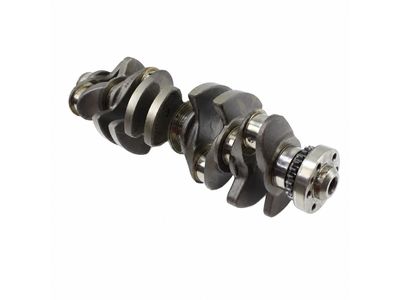
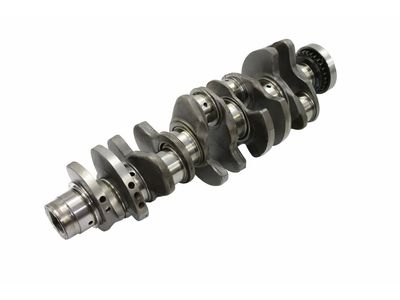
Volkswagen Rabbit Crankshaft Part Number: 07K-105-101-L
$716.74 MSRP: $903.83You Save: $187.09 (21%)Ships in 1-2 Business Days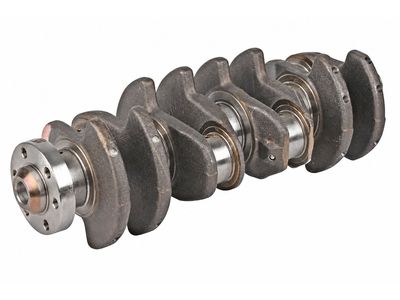
Volkswagen Rabbit Crankshaft Part Number: 049-105-021-AA
$892.13 MSRP: $1125.00You Save: $232.87 (21%)
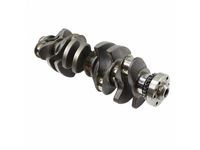
Volkswagen Rabbit Crankshaft
Choose OEM Crankshaft for superior quality and long-lasting durability. They match the Volkswagen's factory specifications exactly and pass strict quality control. If you plan to replace Crankshaft on your Rabbit, put OEM at the top of your list. You'll get the right fit, reliable performance, and peace of mind. We stock an extensive inventory of genuine Volkswagen Rabbit parts. It is easy to find what you need. You will love our competitive prices that help you save. No more hassle with returns or guesswork. Every part includes a warranty straight from the manufacturer. Get trusted quality, strong durability, and real value today.
Volkswagen Rabbit Crankshaft Parts and Q&A
- Q:How can the crankshaft be removed after it has been taken out on Volkswagen Rabbit?A:It is only after removing the engine out of the car that one can remove the crankshaft provided that several parts have been removed, which include the flywheel, crankshaft pulley, oil seal flange, timing belt or chains, oil pans, oil pump body, control housing cover, oil filter, and piston/connecting rod assemblies. In the case of four-cylinder engines, the rear main oil seal retainer should be loosened and then the crankshaft should be removed. Take a dial indicator and measure the crankshaft endplay and make sure that the dial indicator is zeroed before measuring the distance that the crankshaft is moved in forward and reversal. The tolerable endplay is 0.003 to 0.009 inch of four-cylinder and 0.003 to 0.008 inch of five-cylinder engines. In case the endplay is beyond these limits, examine the thrust surfaces, wear. In case of lack of dial indicator, the clearance can be measured using feeler gauges. Screw the main bearing cap bolts slowly, loosen them, and carefully take off the caps followed by raising the crankshaft out, preferably with a helping hand. To install it, the engine block and crankshaft should be clean and checked. Install the engine block in an inverted position, strip off the main bearing caps and wipe off the surfaces of the bearings. Installing New upper main bearing inserts, making sure that the oil holes fit in their place and insert the lower inserts in the caps. Test the clearance of the main bearing oil with Plastigage and make sure it is within the limits. In case of the wrong clearance, check of cleanliness and the bearing size may need to be changed in case of necessity. Install the main bearing caps and fit them with the appropriate orientation, rub engine oil on the thread of the bolts and tighten them in that indicated order. Recheck the crankshaft endplay and make sure that it turns freely with minimum torque. Lastly, place a new rear main oil seal.
Related Volkswagen Rabbit Parts
 Volkswagen Rabbit Camshaft
 Volkswagen Rabbit Engine Mount
 Volkswagen Rabbit Harmonic Balancer
 Volkswagen Rabbit Idler Pulley
 Volkswagen Rabbit Intake Valve
 Volkswagen Rabbit Oil Pump
 Volkswagen Rabbit Piston Ring Set
 Volkswagen Rabbit Rod Bearing
 Volkswagen Rabbit Timing Belt
 Volkswagen Rabbit Timing Cover Gasket
 Volkswagen Rabbit Valve Cover
 Volkswagen Rabbit Valve Spring