×
- Hello
- Login or Register
- Quick Links
- Live Chat
- Track Order
- Parts Availability
- RMA
- Help Center
- Contact Us
- Shop for
- Volkswagen Parts

My Garage
My Account
Cart
Genuine Volkswagen Rabbit Intake Manifold
Engine Intake Manifold- Select Vehicle by Model
- Select Vehicle by VIN
Select Vehicle by Model
orMake
Model
Year
Select Vehicle by VIN
For the most accurate results, select vehicle by your VIN (Vehicle Identification Number).
1 Intake Manifold found
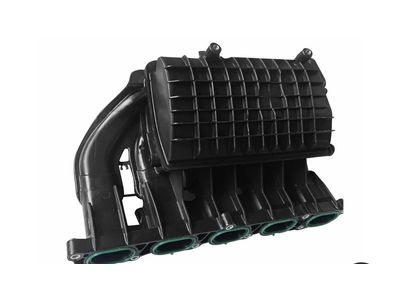
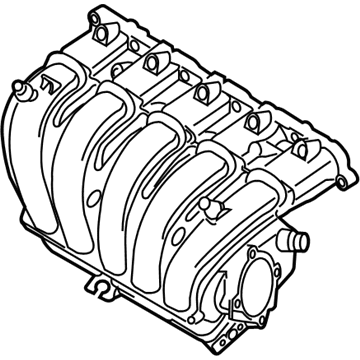
Volkswagen Rabbit Intake Manifold Part Number: 07K-133-201-M
$196.34 MSRP: $274.98You Save: $78.64 (29%)Ships in 1-2 Business Days
Volkswagen Rabbit Intake Manifold
Choose OEM Intake Manifold for superior quality and long-lasting durability. They match the Volkswagen's factory specifications exactly and pass strict quality control. If you plan to replace Intake Manifold on your Rabbit, put OEM at the top of your list. You'll get the right fit, reliable performance, and peace of mind. We stock an extensive inventory of genuine Volkswagen Rabbit parts. It is easy to find what you need. You will love our competitive prices that help you save. No more hassle with returns or guesswork. Every part includes a warranty straight from the manufacturer. Get trusted quality, strong durability, and real value today.
Volkswagen Rabbit Intake Manifold Parts and Q&A
- Q:What precautions should be taken when disconnecting the battery and removing the intake manifold on Volkswagen Rabbit?A:When the battery is removed, a number of systems will have to be re-teamed before they can operate effectively. Removal To start, take the pressure of the fuel system, and then unscrew the cable on the negative terminal of the battery. Working in the compartment above in the engine, take away the engine cover. It is necessary to remove the connectors by pressing the circlip on the outer end of the connectors and uplifting the connector. To disconnect the fuel supply lines and vacuum line (where fitted), press the circlip and lift up on the connector. Unscrew the electrical connections to the fuel injectors, Camshaft Position (CMP) sensor and the EVAP canister purge valve, be sure to disconnect the electrical connection and clamp around the manifold. Unattach the wiring harness and EVAP hose clamp on the intake manifold and then unlock the locking ring, and take out the EVAP canister purge valve. Disassemble throttle body and power steering pump, when equipped. Unplug the electrical connector of Manifold Absolute Pressure (MAP) sensor and take off the harness of the manifold. Unscrew the intake manifold support bracket fasteners, and force the oil dipstick tube / grommet out of the molded bracket on the manifold. Take out the tube of the oil dipstick-to-engine block which holds a fastener and turn the tube out of position. The intake manifold is fixed with a combination of 9 bolts four of which are under the manifold, and the other 5 are on top of the manifold; the bolts are supposed to be left on the manifold in the process of removing. Take out the bolts and then at a slight angle, drag the intake manifold out of the engine. Installation The intake manifold has five ports with which the new manifold gaskets have to be installed, the intake manifold is to be installed, and the bolts and nuts to be tightened in a number of steps, going in toward the middle and outward to the recommended torque. Otherwise, installation is the opposite of removal.
Related Volkswagen Rabbit Parts
 Volkswagen Rabbit Air Filter
 Volkswagen Rabbit Air Filter Box
 Volkswagen Rabbit Air Intake Hose
 Volkswagen Rabbit Fuel Pump Gasket
 Volkswagen Rabbit Fuel Tank
 Volkswagen Rabbit Fuel Tank Strap
 Volkswagen Rabbit Gas Cap
 Volkswagen Rabbit Intake Manifold Gasket
 Volkswagen Rabbit Mass Air Flow Sensor
 Volkswagen Rabbit Shut Off Valve
 Volkswagen Rabbit Throttle Body
 Volkswagen Rabbit Throttle Body Gasket