×
- Hello
- Login or Register
- Quick Links
- Live Chat
- Track Order
- Parts Availability
- RMA
- Help Center
- Contact Us
- Shop for
- Volkswagen Parts

My Garage
My Account
Cart
Genuine Volkswagen Relay Boxes
Relay Block- Select Vehicle by Model
- Select Vehicle by VIN
Select Vehicle by Model
orMake
Model
Year
Select Vehicle by VIN
For the most accurate results, select vehicle by your VIN (Vehicle Identification Number).
45 Relay Boxes found
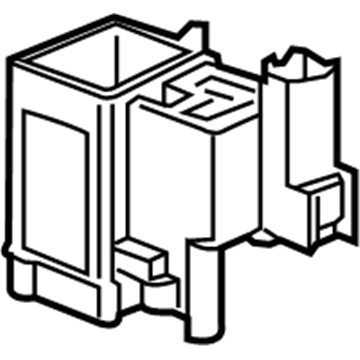
Volkswagen Relay Box Part Number: 5Q0-937-503-B
$26.03 MSRP: $43.39You Save: $17.36 (41%)Ships in 1-2 Business DaysProduct Specifications- Other Name: Plate
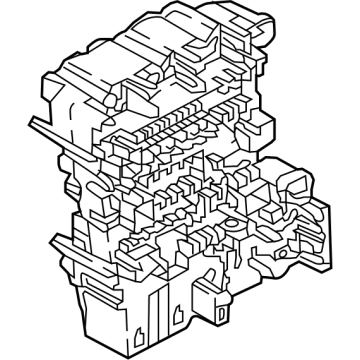
Volkswagen Junction Block Part Number: 5WA-937-615
$19.64 MSRP: $32.20You Save: $12.56 (40%)Ships in 1-2 Business DaysProduct Specifications- Other Name: Plate; Relay & Fuse Plate
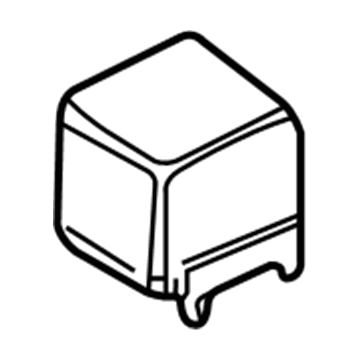
Volkswagen Relay Box Part Number: 1J0-941-385-A-01C
$28.79 MSRP: $47.98You Save: $19.19 (40%)Ships in 1-2 Business DaysProduct Specifications- Other Name: Box; Upper Cover
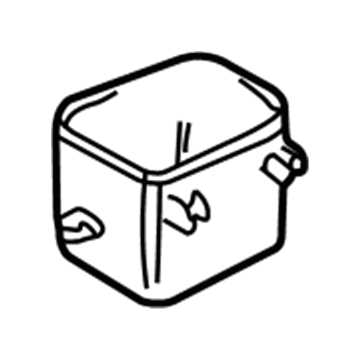
Volkswagen Relay Box Part Number: 1J0-941-393-B-B41
$28.79 MSRP: $47.98You Save: $19.19 (40%)Ships in 1-2 Business DaysProduct Specifications- Other Name: Box; Lower Cover
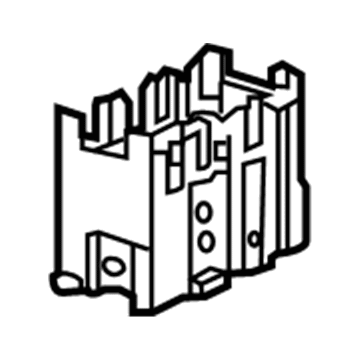
Volkswagen Relay Box Part Number: 5QA-937-507
$2.61 MSRP: $4.28You Save: $1.67 (40%)Ships in 1-2 Business DaysProduct Specifications- Other Name: Plate; Relay Plate
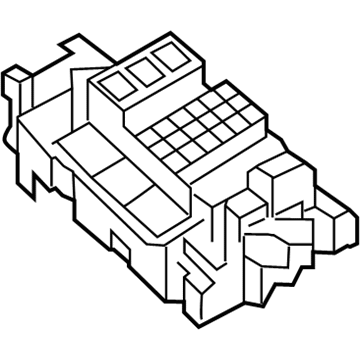
Volkswagen Fuse & Relay Box Part Number: 5C0-937-125-A
$49.91 MSRP: $69.33You Save: $19.42 (29%)Ships in 1-2 Business DaysProduct Specifications- Other Name: Plate
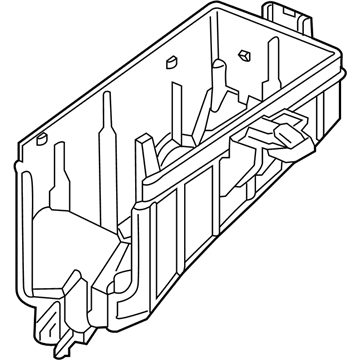
Volkswagen Housing Part Number: 5Q0-907-361-D
$58.43 MSRP: $81.16You Save: $22.73 (29%)Ships in 1-2 Business DaysProduct Specifications- Other Name: Fuse & Relay Box
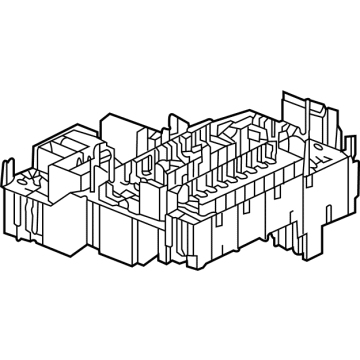
Volkswagen Housing Part Number: 5Q0-907-361-G
$58.43 MSRP: $81.16You Save: $22.73 (29%)Ships in 1-2 Business DaysProduct Specifications- Other Name: Fuse & Relay Box
- Replaces: 5Q0-907-361-C
Volkswagen Fuse & Relay Box Part Number: 5WD-937-125-D
$45.59 MSRP: $63.31You Save: $17.72 (28%)Ships in 1-2 Business DaysProduct Specifications- Other Name: E Box
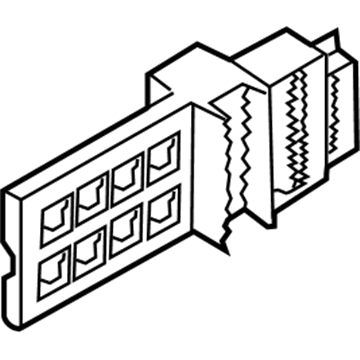
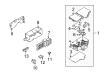
Volkswagen Fuse & Relay Box Part Number: 3D0-937-499-B
$78.53 MSRP: $109.98You Save: $31.45 (29%)Ships in 1-2 Business DaysProduct Specifications- Other Name: Plate
Volkswagen Fuse & Relay Box Part Number: 5C0-937-125-C
$79.72 MSRP: $111.65You Save: $31.93 (29%)Ships in 1-2 Business DaysProduct Specifications- Other Name: Plate

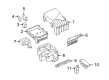
Volkswagen Module Part Number: 03L-907-281
$84.95 MSRP: $118.99You Save: $34.04 (29%)Ships in 1-2 Business DaysProduct Specifications- Other Name: Control Unit
- Replaced by: 038-907-281-D
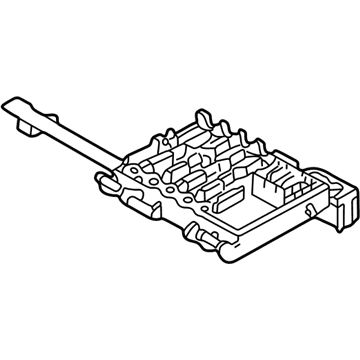
Volkswagen Fuse & Relay Box Part Number: 1J0-937-617-B
$108.29 MSRP: $151.67You Save: $43.38 (29%)Ships in 1-2 Business DaysProduct Specifications- Other Name: Holder
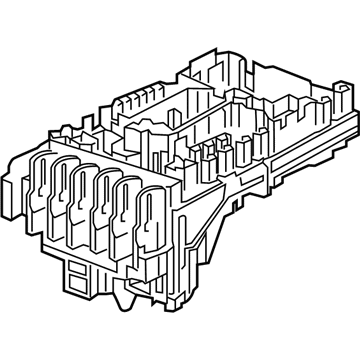
Volkswagen Fuse & Relay Box Part Number: 5Q0-937-125-D
$157.07 MSRP: $219.99You Save: $62.92 (29%)Ships in 1-2 Business DaysProduct Specifications- Other Name: E Box; Fuse Box Main, Relay & Fuse Plate
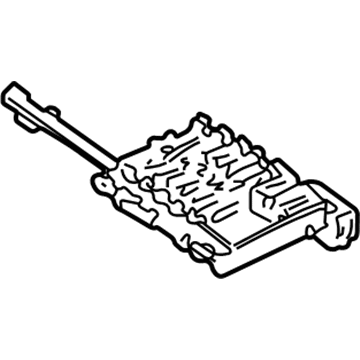
Volkswagen Fuse & Relay Box Part Number: 1C0-937-617
$172.54 MSRP: $241.65You Save: $69.11 (29%)Ships in 1-2 Business DaysProduct Specifications- Other Name: Holder
Volkswagen Fuse & Relay Box Part Number: 1J0-937-617-D
$172.54 MSRP: $241.64You Save: $69.10 (29%)Ships in 1-2 Business DaysProduct Specifications- Other Name: Holder
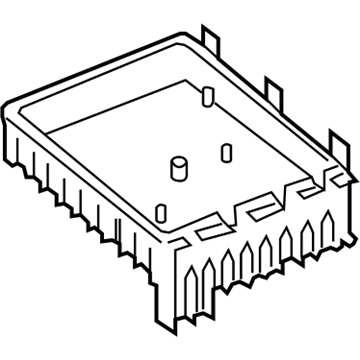
Volkswagen Fuse & Relay Box Part Number: 1K0-937-125-A
$180.87 MSRP: $253.32You Save: $72.45 (29%)Ships in 1-2 Business DaysProduct Specifications- Other Name: Plate; Relay & Fuse Plate
- Replaces: 1K0-937-125, 000-937-125
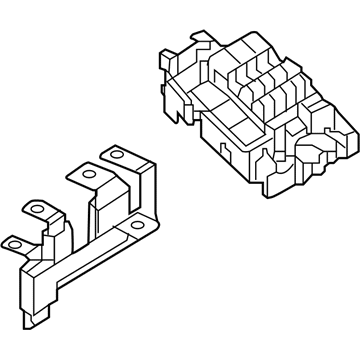
Volkswagen Fuse & Relay Box Part Number: 5C0-937-819-K
$195.15 MSRP: $273.31You Save: $78.16 (29%)Ships in 1-2 Business DaysProduct Specifications- Other Name: Plate
- Replaces: 5C0-937-819-A
Volkswagen Fuse & Relay Box Part Number: 5C0-937-819-E
$229.66 MSRP: $321.65You Save: $91.99 (29%)Ships in 1-2 Business DaysProduct Specifications- Other Name: Plate
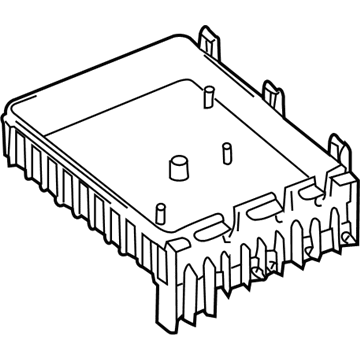
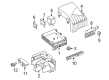
Volkswagen Fuse & Relay Box Part Number: 1K0-937-125-D
$233.23 MSRP: $326.65You Save: $93.42 (29%)Ships in 1-2 Business DaysProduct Specifications- Other Name: Plate; Relay & Fuse Plate
- Replaces: 1K0-937-125-B, 1K0-937-125-C
| Page 1 of 3 |Next >
1-20 of 45 Results
Volkswagen Relay Boxes
Volkswagen Relay Boxes are the electrical traffic cops, ensuring that all the lights, sensors, and components stay alive, routing steady power and shielding delicate circuits from heat, dirt, and vibration. Since 1937, the brand has driven toward the simple concept of giving people dependable mobility, a vision that created icons such as the Beetle and the Type 2 van and now extends to sleek sedans, versatile SUVs, and the new ID electric cars. From punchy TSI turbo engines to the flexible MQB platform, every VW exhibits clever engineering that is geared towards quick acceleration, solid efficiency, and lower ownership costs. Digital cockpits, park assist features, and responsive MIB infotainment screens provide an added level of modern comfort while clean, timeless exterior styling helps a VW stand out without screaming for attention. Drivers trust the brand because its vehicles combine day-to-day practicality with a bit of fun that makes any commute a little lighter. Just as vital, the Relay Boxes fitted throughout the lineup offer a compact central hub for the fuses and relays to keep them all in order and cool, so that faults can be traced out in seconds using the diagram under the lid. Each box houses circuits that are isolated from one another to prevent voltage spikes from spreading, prevents moisture from corroding contacts, and creates space for adding components, making these Relay Boxes a quiet hero to protecting audio systems, headlights, and charging ports alike. When left intact, they allow each VW journey to remain bright, connected, and worry-free.
Buying OEM parts is a smart move to keep your long-term repair costs low. These components are built to last because VW uses such strict factory standards. At VWPartsGiant.com, it is easy to find genuine Volkswagen Relay Boxes at prices that actually beat the competition. You get a real manufacturer's warranty with every single part, so you know your purchase is safe. Plus, forget about return headaches since our policy is easy and worry-free. We ship your order fast, too. If you have questions, our team of parts experts is ready to help. Why wait? Start shopping now!
Volkswagen Relay Boxes Parts and Q&A
- Q: What role do Relay Boxes play in the operation of electrical accessories on Volkswagen Jetta?A:A number of electrical items in the car such as the fuel injection, horns, starter and the fog lamps use relays to send electrical signals to the parts. The principle of operation of relays is that a small current, called the control circuit, is used to switch the current of a large current, called the power circuit. The faulty relay will lead to inappropriate functioning of the component in question. In most cases, the majority of the relays are mounted in the engine compartment fuse/relay box.
- Q: What are the functions and testing methods of Relay Boxes in vehicle electrical systems on Volkswagen Passat?A:The vehicle has a number of electrical accessories that use relays to transmit electrical signals to the components including the fuel injection system, horns, starter, and the fog lamps. Relays are controlled by a low-current control circuit to open and close a high-current power circuit and when a relay is faulty, the power component it operates will not work. Relays are mostly found in the under-dash fuse/relay box and these can be taken out and either tested or replaced as a unit in case of a suspected faulty relay. The relays in question are typically known as the ISO relays, and its numbered terminals reflect the general connection and purpose in the circuit. The relay control circuit has two terminals, one of which is connected to the coil of the relay, and the other to the power circuit. Energized, the coil produces a magnetic field which has the effect of closing the larger contacts of a power circuit supplying power to the loads in the circuit. The control circuit is usually considered to be terminal 85 and terminal 86 and certain connections are necessary when a diode or resistor is involved. Terminal 30 goes to the battery voltage source to be loaded into the circuit and terminal 87 is connected to the ground side of the circuit. An ohmmeter may be used to test the continuity through the relay control coil, to ensure that there are appropriate resistance values in either direction. Also, continuity is not to be existent between terminal 30 and 87 under the de-energizing condition of the relay. The functionality can be verified by hooking jumper wires to the corresponding terminals and ensuring that there is continuity between the power circuit terminals. When the relay passes all these tests, it is a good relay but fails to pass any of them, then it is replaced.

Related Volkswagen Parts
 Volkswagen Timing Belt
 Volkswagen Camshaft
 Volkswagen Belt Tensioner
 Volkswagen Fuel Cap
 Volkswagen Throttle Position Sensor
 Volkswagen Body Control Module
 Volkswagen EGR Pressure Sensor
 Volkswagen Engine Oil Cooler
 Volkswagen Fuel Level Sensor
 Volkswagen Fuel Pump Driver Module
 Volkswagen Fuel Pump Gasket
 Volkswagen Valve Spring Retainer
Browse by Model
Arteon Relay Boxes Atlas Cross Sport Relay Boxes Atlas Relay Boxes Beetle Relay Boxes CC Relay Boxes e-Golf Relay Boxes Eos Relay Boxes Golf Alltrack Relay Boxes Golf R Relay Boxes Golf Relay Boxes Golf SportWagen Relay Boxes GTI Relay Boxes ID.4 Relay Boxes Jetta Relay Boxes Passat Relay Boxes Phaeton Relay Boxes R32 Relay Boxes Rabbit Relay Boxes Routan Relay Boxes Taos Relay Boxes Tiguan Relay Boxes Touareg Relay Boxes