×
- Hello
- Login or Register
- Quick Links
- Live Chat
- Track Order
- Parts Availability
- RMA
- Help Center
- Contact Us
- Shop for
- Volkswagen Parts

My Garage
My Account
Cart
Genuine Volkswagen Rabbit Brake Pad Set
Disc Brake Pad Set- Select Vehicle by Model
- Select Vehicle by VIN
Select Vehicle by Model
orMake
Model
Year
Select Vehicle by VIN
For the most accurate results, select vehicle by your VIN (Vehicle Identification Number).
6 Brake Pad Sets found
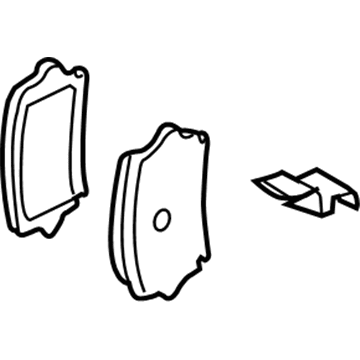
Volkswagen Rabbit Brake Pads Part Number: 1K0-698-451-P
$78.02 MSRP: $100.86You Save: $22.84 (23%)Ships in 1-2 Business Days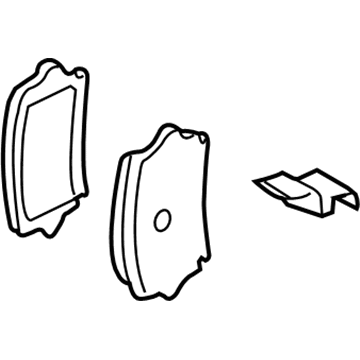
Volkswagen Rabbit Brake Pads Part Number: 1K0-698-451-H
$80.91 MSRP: $104.60You Save: $23.69 (23%)Ships in 1-2 Business Days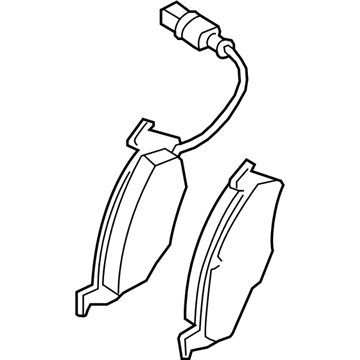
Volkswagen Rabbit Brake Pads Part Number: 3C0-698-151-K
$103.52 MSRP: $133.83You Save: $30.31 (23%)Ships in 1-2 Business Days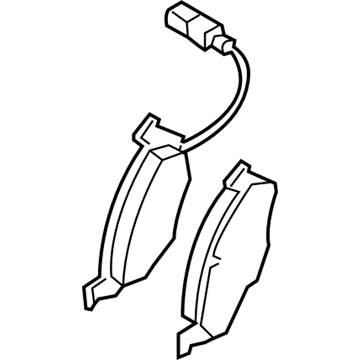
Volkswagen Rabbit Brake Pads Part Number: 1K0-698-151-P
$253.14 MSRP: $319.22You Save: $66.08 (21%)Ships in 1-2 Business Days
Volkswagen Rabbit Front Pads Part Number: 191-698-151-L
$61.84 MSRP: $79.95You Save: $18.11 (23%)Ships in 1-2 Business Days
Volkswagen Rabbit Rear Pads Part Number: 1K0-698-451-L
$89.24 MSRP: $115.37You Save: $26.13 (23%)Ships in 1-2 Business Days
Volkswagen Rabbit Brake Pad Set
Choose OEM Brake Pad Set for superior quality and long-lasting durability. They match the Volkswagen's factory specifications exactly and pass strict quality control. If you plan to replace Brake Pad Set on your Rabbit, put OEM at the top of your list. You'll get the right fit, reliable performance, and peace of mind. We stock an extensive inventory of genuine Volkswagen Rabbit parts. It is easy to find what you need. You will love our competitive prices that help you save. No more hassle with returns or guesswork. Every part includes a warranty straight from the manufacturer. Get trusted quality, strong durability, and real value today.
Volkswagen Rabbit Brake Pad Set Parts and Q&A
- Q: How to replace the rear Brake Pad Set and calipers on Volkswagen Rabbit?A:Relax the back wheel bolts, obstruct the front wheels, then elevate the back of the vehicle then press it firmly on jackstands and take off the back wheels. Unattaching the cable end of the parking brake lever involves pushing the cable ball end off the lever with the slide of the cable ball end, then a PCI pull pulling the parking brake cable out of the mounting bracket by means of an open-end wrench compressing and pushing the tabs into submission. Unscrew the caliper mounting bolts, retaining the guide pins with an open-end wrench to ensure that they do not rotate and the mounting bolts should be thrown away and new ones should be installed. Lift the caliper off the brake pads and hold it up with a piece of wire longer than the suspension strut and make sure that the caliper is not held suspended by a loose piece of rubber hose. Take away caliper mounted bracket with brake pads and other anti-rattle springs. Prior to installing new pads, ensure the anti-rattle springs are intact and fitted in a tight manner, guide pins slide with ease and rubber guide pin boots are not damaged. In case the guide pins are fine and require lubrication, lubricate them using high temperature brake grease and re-fit. Wipe caliper and piston with brake system cleaner, examine dust seal and piston, looking in to any damage or leakage. In order to install the new brake pads, fully retract the piston into the caliper bore by turning it clockwise with a retraction tool or needle-nose pliers, without a C-clamp. Attach a brake bleeding system to the bleed screw, make the bleed screw open, whilst the piston is in a completely drawn-up position, to extract excess brake fluid, and only after the piston is wholly drawn up to avoid entry of air into the braking system, should the bleed screw be screwed tight. Depending on the pad, remove the protective sheet on the back of the plates, then attach pads into the mounting bracket with the friction material in the disc facing the Brake Disc. Put the caliper through the pads again, making sure that the anti-rattle springs are seated properly, and attach new mounting bolts and screw them in to the required amount without rotating the guide pins. The same steps should be repeated on the rest of the rear brake caliper, and the parking brake cables should be connected and adjusted. Press the brake pedal again and again to make sure the pads touch the discs, verify that the discs move freely, fit the wheels and wheel bolts, lower the vehicle to the ground and screw the wheel bolts to the required tightness. Lastly, top up and check the level of the brake fluid, as required and test the brakes before putting the vehicle into normal service.
Related Volkswagen Rabbit Parts
 Volkswagen Rabbit Starter
 Volkswagen Rabbit Axle Support Bushings
 Volkswagen Rabbit Brake Drum
 Volkswagen Rabbit Brake Dust Shield
 Volkswagen Rabbit Car Bulbs
 Volkswagen Rabbit Control Arm Bolt
 Volkswagen Rabbit Cup Holder
 Volkswagen Rabbit Fuel Tank Strap
 Volkswagen Rabbit Shock Absorber
 Volkswagen Rabbit Spark Plug Wire
 Volkswagen Rabbit Steering Column Cover