×
- Hello
- Login or Register
- Quick Links
- Live Chat
- Track Order
- Parts Availability
- RMA
- Help Center
- Contact Us
- Shop for
- Volkswagen Parts

My Garage
My Account
Cart
Genuine Volkswagen Passat Crankshaft
Crank Shaft- Select Vehicle by Model
- Select Vehicle by VIN
Select Vehicle by Model
orMake
Model
Year
Select Vehicle by VIN
For the most accurate results, select vehicle by your VIN (Vehicle Identification Number).
9 Crankshafts found
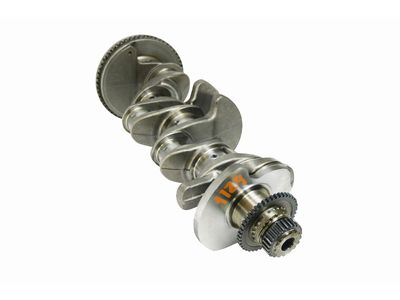
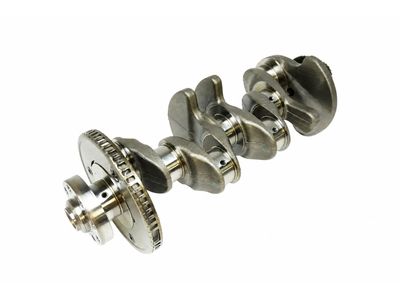
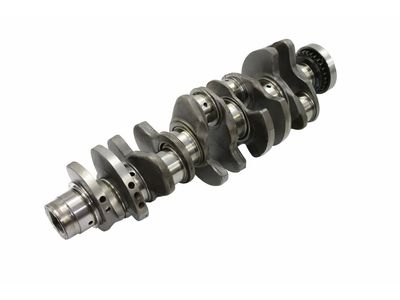
Volkswagen Passat Crankshaft Part Number: 06K-105-101-L
$698.44 MSRP: $880.75You Save: $182.31 (21%)Ships in 1-2 Business Days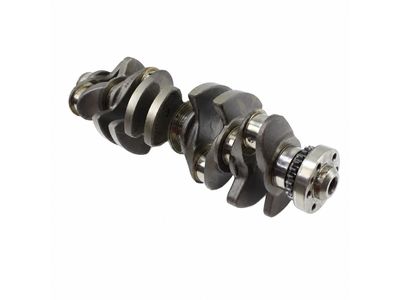
Volkswagen Passat Crankshaft Part Number: 07K-105-101-L
$716.74 MSRP: $903.83You Save: $187.09 (21%)Ships in 1-2 Business Days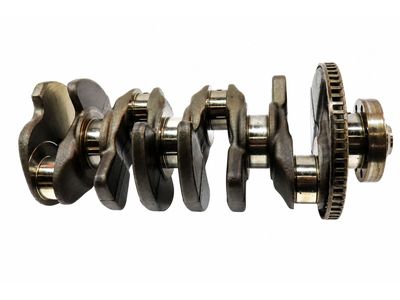
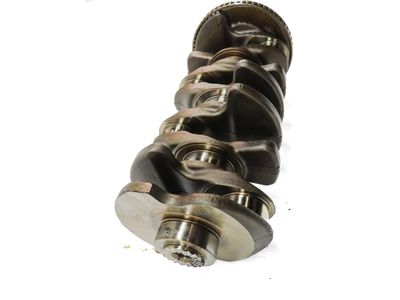
Volkswagen Passat Crankshaft Part Number: 06H-105-021-M
$1345.04 MSRP: $1574.99You Save: $229.95 (15%)Ships in 1-2 Business Days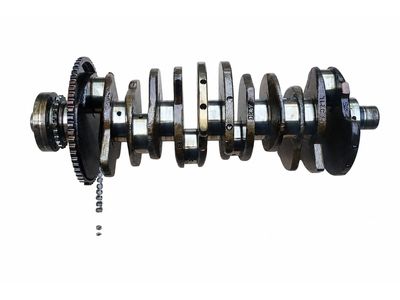
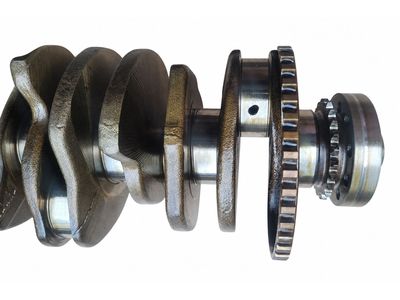
Volkswagen Passat Crankshaft Part Number: 021-105-101-L
$2338.74 MSRP: $2738.57You Save: $399.83 (15%)Ships in 1-2 Business Days
Volkswagen Passat Crankshaft Part Number: 06K-105-101
$649.64 MSRP: $819.22You Save: $169.58 (21%)Ships in 1-2 Business Days
Volkswagen Passat Crankshaft Part Number: 03G-105-021-A
$1012.60 MSRP: $1276.92You Save: $264.32 (21%)Ships in 1-2 Business Days
Volkswagen Passat Crankshaft Part Number: 06A-105-021-BM
$1607.34 MSRP: $1882.12You Save: $274.78 (15%)Ships in 1-2 Business Days
Volkswagen Passat Crankshaft Part Number: 028-105-101-L
$1714.09 MSRP: $2007.13You Save: $293.04 (15%)Ships in 1-2 Business Days
Volkswagen Passat Crankshaft Part Number: 03H-105-101-P
$2943.24 MSRP: $3446.42You Save: $503.18 (15%)Ships in 1-2 Business Days
Volkswagen Passat Crankshaft
Choose OEM Crankshaft for superior quality and long-lasting durability. They match the Volkswagen's factory specifications exactly and pass strict quality control. If you plan to replace Crankshaft on your Passat, put OEM at the top of your list. You'll get the right fit, reliable performance, and peace of mind. We stock an extensive inventory of genuine Volkswagen Passat parts. It is easy to find what you need. You will love our competitive prices that help you save. No more hassle with returns or guesswork. Every part includes a warranty straight from the manufacturer. Get trusted quality, strong durability, and real value today.
Volkswagen Passat Crankshaft Parts and Q&A
- Q:How can the crankshaft be removed after it has been taken out on Volkswagen Passat?A:Crankshaft could be removed only when the engine is out of the car, and supposing that the flywheel/driveplate, timing belt, oil pan, oil pump, front and rear oil seal housings, and the piston/connecting rod assemblies have been disassembled. Check the endplay before removal by clamping a dial indicator to its snout, the stem should be aligned with the crankshaft. Take the crankshaft to the back and make the dial indicator zero, followed by prying on the crankshaft to the front and re-checking the dial; the distance moved will show the endplay. In case it is greater than specification, inspect crankshaft thrust surfaces on wear and in case there is no wear, new main bearings could correct the problem. In case of the absence of a dial indicator, feeler gauges could be employed by thrusting the crankshaft forward and inserting the gauges in the crankshaft-thrust main bearing interface to detect clearance. Thrust bearing is found at the number three main bearing cap in the four cylinder engine and four on the V6 engine. Check the main bearing caps, which should have markings showing their positions, numbered in the front to the rear, or mark them accordingly. Unscrew the main bearing cap bolts slowly in order to be able to remove them with a hand, keeping track of any stud bolts so that they can be re-attached properly. Tap the caps with a soft-face hammer to keep them off of the engine block, and use bolts as levers, whenever needed, and be careful never to drop the bearing inserts. The crankshaft is to be carefully lifted out of the engine with or without help since it is heavy and care should be taken not to scuff the reluctor ring where the crankshaft position sensor is mounted. Install bearing inserts and replace the caps at their locations on the engine block and tighten the bolts to finger tight.
- Q:How to install a crankshaft during engine reassembly on Volkswagen Passat?A:The first step in reassembling the engine involves crankshaft installation which assumes that engine block and crankshaft are cleaned, checked and repaired. Install the engine with bottom up and then take out the main bearing cap bolts and put the caps onto the table in the sequence of installation. In the event of being present, take off original bearing inserts out of the block and the caps with care that the bearing surfaces are clean. Wipe the rear of the new main bearing inserts and insert one in each main bearing saddle in block with the grooved one properly in place and with the oil holes in position. fit the crankshaft thrust washers according to the type of engine to be used, and clean the faces of the bearing and examine the oil holes at crankshaft. When it is known to be clean, install the crankshaft in place in the main bearings and verify the main bearing oil clearance with Plastigage, applying it on each main bearing journal of the crankshaft. Clean the bearing faces in the caps and replace them in their original positions with the arrows facing the front of the engine and screw up the bolts to the first step without any disturbance of the Plastigage. The main bearing caps should be carefully removed and then the crushed Plastigage should be compared with the scale to measure the crushed Plastigage to ensure that it is within specifications. In case of the incorrect clearance, look at dirt or oil interference, and then look at other bearing inserts. Cleanse the bearing faces of the block, and rub a thin coat of grease or assembly lube on the journals and bearing faces, taking off all traces of Plastigage. Install the crankshaft again, clean the faces of the bearings in the caps then lubricate them and fix the caps with the arrows facing forward. Trap the ends of the crankshaft till the thrust surfaces are aligned and all main bearing cap bolts re-tightened to final torque, beginning at the center and loosening to the outer. Test the crankshaft by hand rotation to test for binding and lastly test the crankshaft endplay with feeler gauges or dial indicator that it is correct provided thrust faces are undamaged and new bearings are being fitted. Install the intermediate shaft at this stage in case it is a four-cylinder engine.
Related Volkswagen Passat Parts
 Volkswagen Passat Balance Shaft Chain
 Volkswagen Passat Balance Shaft Gear
 Volkswagen Passat Cam Gear
 Volkswagen Passat Camshaft Bearing
 Volkswagen Passat Crankshaft Gear
 Volkswagen Passat Idler Pulley
 Volkswagen Passat Oil Filter Gasket
 Volkswagen Passat Oil Pan Gasket
 Volkswagen Passat Timing Cover
 Volkswagen Passat Timing Cover Gasket
 Volkswagen Passat Valve Cover
 Volkswagen Passat Valve Spring
Browse by Year
2022 Crankshaft 2021 Crankshaft 2020 Crankshaft 2019 Crankshaft 2018 Crankshaft 2017 Crankshaft 2016 Crankshaft 2015 Crankshaft 2014 Crankshaft 2013 Crankshaft 2012 Crankshaft 2010 Crankshaft 2009 Crankshaft 2008 Crankshaft 2005 Crankshaft 2004 Crankshaft 2003 Crankshaft 2002 Crankshaft 2001 Crankshaft 1997 Crankshaft 1996 Crankshaft 1995 Crankshaft 1994 Crankshaft 1993 Crankshaft