×
- Hello
- Login or Register
- Quick Links
- Live Chat
- Track Order
- Parts Availability
- RMA
- Help Center
- Contact Us
- Shop for
- Volkswagen Parts

My Garage
My Account
Cart
Genuine Volkswagen Flywheel
Clutch Flywheel- Select Vehicle by Model
- Select Vehicle by VIN
Select Vehicle by Model
orMake
Model
Year
Select Vehicle by VIN
For the most accurate results, select vehicle by your VIN (Vehicle Identification Number).
53 Flywheels found
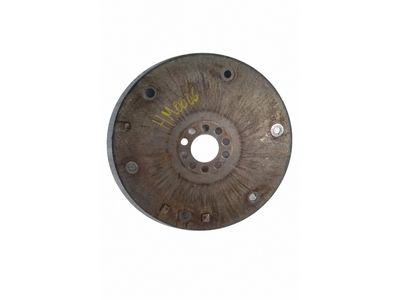
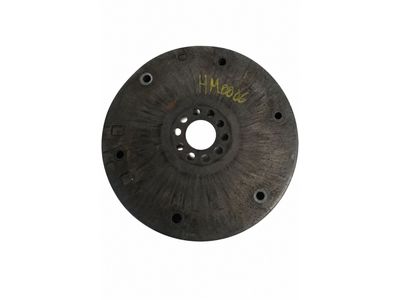
Volkswagen Drive Plate Part Number: 021-105-327-C
$112.50 MSRP: $157.57You Save: $45.07 (29%)Ships in 1-2 Business DaysProduct Specifications- Other Name: Drive Disc
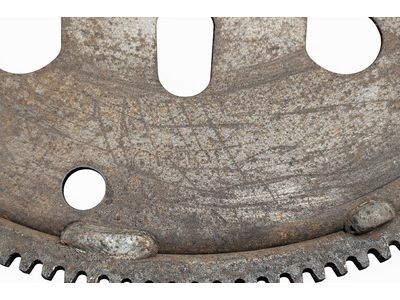
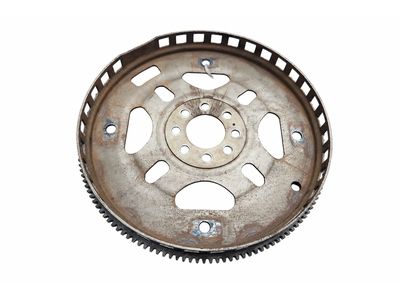
Volkswagen Drive Plate Part Number: 7B0-105-323
$121.37 MSRP: $169.99You Save: $48.62 (29%)Ships in 1-2 Business DaysProduct Specifications- Other Name: Drive Disc
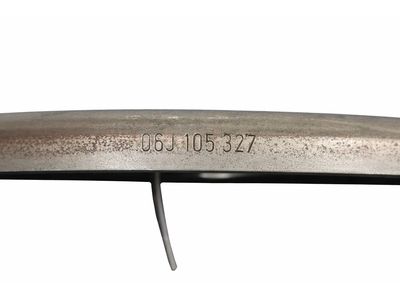
Volkswagen Drive Plate Part Number: 06J-105-327
$148.74 MSRP: $208.32You Save: $59.58 (29%)Ships in 1-2 Business DaysProduct Specifications- Other Name: Drive Disc
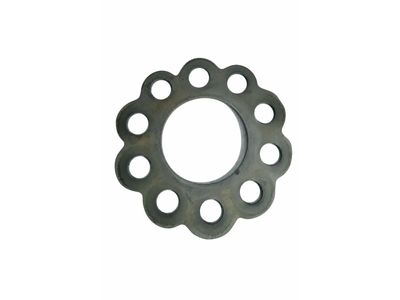
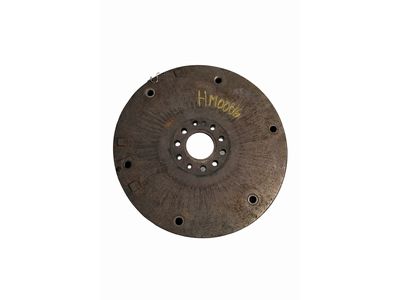
Volkswagen Drive Plate Part Number: 021-105-327
$192.77 MSRP: $269.98You Save: $77.21 (29%)Ships in 1-2 Business DaysProduct Specifications- Other Name: Drive Disc
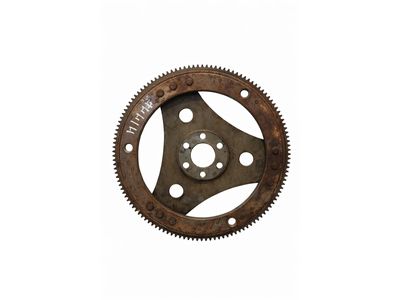
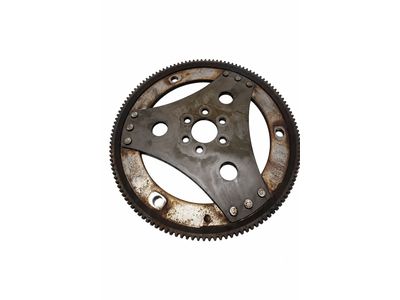
Volkswagen Drive Plate Part Number: 058-105-323-G
$298.07 MSRP: $407.20You Save: $109.13 (27%)Ships in 1-2 Business DaysProduct Specifications- Other Name: Drive Disc
- Replaces: 058-105-323-D
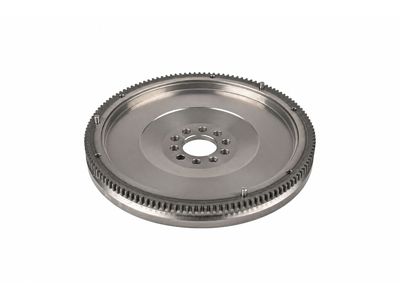
Volkswagen Flywheel Part Number: 021-105-269-BX
$330.96 MSRP: $449.98You Save: $119.02 (27%)Ships in 1-2 Business DaysProduct Specifications- Replaces: 021-105-269-B

Volkswagen Flywheel Part Number: 03C-105-269-AK
$506.29 MSRP: $691.65You Save: $185.36 (27%)Ships in 1-2 Business DaysProduct Specifications- Replaces: 03C-105-269-P
Volkswagen Flywheel Part Number: 03L-105-266-EF
$1067.49 MSRP: $1346.14You Save: $278.65 (21%)Ships in 1-2 Business DaysProduct Specifications- Other Name: Drive Plate
- Replaces: 03L-105-266-DE
Volkswagen Drive Plate Part Number: 06J-105-327-B
$74.96 MSRP: $104.99You Save: $30.03 (29%)Ships in 1-2 Business DaysProduct Specifications- Other Name: Drive Disc
Volkswagen Drive Plate Part Number: 071-105-189-A
$82.11 MSRP: $115.00You Save: $32.89 (29%)Ships in 1-2 Business DaysProduct Specifications- Other Name: Rotor
Volkswagen Drive Plate Part Number: 021-105-189-C
$120.19 MSRP: $168.33You Save: $48.14 (29%)Ships in 1-2 Business DaysProduct Specifications- Other Name: Rotor
Volkswagen Drive Plate Part Number: 023-105-323-A
$129.71 MSRP: $181.67You Save: $51.96 (29%)Ships in 1-2 Business DaysProduct Specifications- Other Name: Drive Disc
Volkswagen Drive Plate Part Number: 053-105-323-E
$188.50 MSRP: $264.00You Save: $75.50 (29%)Product Specifications- Other Name: Drive Disc
Volkswagen Flywheel Part Number: 074-105-269-EX
$216.49 MSRP: $301.00You Save: $84.51 (29%)Ships in 1-2 Business DaysProduct Specifications- Replaces: 074-105-269-E
Volkswagen Flywheel Part Number: 025-105-271-X
$162.75 MSRP: $225.00You Save: $62.25 (28%)Product Specifications- Other Name: Drive Plate
- Replaces: 025-105-271
Volkswagen Drive Plate Part Number: 038-105-323
$250.10 MSRP: $341.67You Save: $91.57 (27%)Ships in 1-2 Business DaysProduct Specifications- Other Name: Drive Disc
Volkswagen Drive Plate Part Number: 07D-105-323
$373.32 MSRP: $510.00You Save: $136.68 (27%)Ships in 1-2 Business DaysProduct Specifications- Other Name: Drive Disc
Volkswagen Flywheel Part Number: 068-105-269-F
$435.08 MSRP: $594.36You Save: $159.28 (27%)Ships in 1-2 Business DaysProduct Specifications- Replaces: 068-105-269-FX
Volkswagen Flywheel Part Number: 056-105-269-N
$437.92 MSRP: $598.25You Save: $160.33 (27%)Ships in 1-2 Business DaysVolkswagen Flywheel Part Number: 027-105-271-P
$475.79 MSRP: $649.98You Save: $174.19 (27%)Ships in 1-2 Business DaysProduct Specifications- Replaces: 027-105-271-N, 027-105-271-PX, 027-105-271-NX, 027-105-270-B
| Page 1 of 3 |Next >
1-20 of 53 Results
Volkswagen Flywheel
Volkswagen Flywheel smooths out power pulses and assists the starter in cranking the engine so every ignition is quick and each gear change is clean. VW started in 1937 with the dream of a practical car for all, and today its range continues to strike the balance between affordability and solid engineering. From the iconic Beetle to cutting-edge ID electric models, the brand combines simplicity of style with modern tech such as digital cockpits, touchscreen MIB infotainment, head-up displays and park assist on the flexible MQB platform that reduces weight and cost. Turbocharged TSI engines provide lively performance while direct fuel injection keeps fuel use low and VW continues to perfect safety and comfort so drivers feel confident on any trip. The Flywheel is a quiet yet very important mechanism that works quietly at the back of every engine, storing up the rotational energy just like a mechanical battery so that the torque remains constant even when the cylinder firing differs, and that means a smooth and low vibration experience for the passengers. Its ring gear enables the starter motor to turn the crankshaft while its flat surface works in tandem with the clutch and the pressure plate to engage or disengage power in manual and automated gearboxes. Single-piece designs provide strength and dual-mass versions provide spring damping to filter out vibrations providing a calm ride throughout the VW range and helping transmissions to last longer as shock loads are reduced.
Buying OEM parts is a smart move to keep your long-term repair costs low. These components are built to last because VW uses such strict factory standards. At VWPartsGiant.com, it is easy to find genuine Volkswagen Flywheel at prices that actually beat the competition. You get a real manufacturer's warranty with every single part, so you know your purchase is safe. Plus, forget about return headaches since our policy is easy and worry-free. We ship your order fast, too. If you have questions, our team of parts experts is ready to help. Why wait? Start shopping now!
Volkswagen Flywheel Parts and Q&A
- Q:How does the mounting arrangement of the flywheel and clutch components on Volkswagen Cabrio?A:The installation of the flywheel and clutch parts on the mount differs according to the nature of the transaxle used. In cars that have the 020 (5-speed) transaxle, the pressure plate is simply attached to the end of the crankshaft, and the flywheel is then attached to the pressure plate and thus the dismantling of these parts is easy. In vehicles with the 084 (4-speed) transaxle, the system is more traditional (the flywheel is placed on the crankshaft and the pressure plate connected to it), so the flywheel can be removed differently.
- Q:What are the steps and considerations for replacing a flywheel after engine overhaul on Volkswagen Transporter?A:In case flywheel has been removed, then the required apparatus to replace it is likely to be present. Having done a complete overhaul of the entire engine, it is recommended to check the crankshaft endfloat, which is defined as the distance between the inner side of the flywheel boss and the rear main bearing shell flange. The gap is minimized by shims which are required to be installed before the oil seal and it is difficult to push them in after the oil seal, but it is difficult to remove the shims after fitting without breaking them. In case the main bearing shell is renewed, the original shims would probably be the correct ones because wear on bearing shell flange is present. The amount of shims required to produce the necessary total thickness is always three (6 sizes are available 0.24 mm, 0.30 mm, 0.32 mm, 0.34 mm, 0.36 mm, 0.38 mm), and the thickness of the third shim is determined. The four dowel pegs are to be installed in the crankshaft flange with a proper fitting in the flange and the flywheel since any loose fitting may cause the flywheel to be loose despite the nut being tight. The fine O ring seal in the flywheel flange recess would need to be replaced before the flywheel is installed. It is essential to hold the flywheel firmly in place and be kept square but ensure that it is placed above the dowel pegs, in case of difficulty in positioning, a scrap of wood can hold the flywheel in position. When it is found positive, the center bolt and washer must be replaced and tightened finger-tight then it must be tightened carefully to pull in the flywheel, but not too tight lest the dowel always pierce the holes and damage the dowel pegs. To ensure proper crankshaft endfloat measuring with dial gauge micrometer by placing the flywheel face against the center bolt, the center bolt should be tightened at least 75 ft lbs and move the crankshaft back and forth to gauge the float. Calculations of the thickness of the third shim is that which is given by the measured float, less 0.10 mm and any three shim may be used as long as the total thickness is the same as that of the two in place and the calculated third shim. Once the right shims have been picked, the flywheel must be taken out, the shims placed and the oil seal attached and then the flywheel replaced in the same fashion. It takes a tightening of 253 ft lbs (35 mkg) to tighten the center bolt and the flywheel can be attached in the same fashion as it was removed i.e. by a flat bar or angle to hold the flywheel pin while tightening the nut. The correct torque is essential to avoid vibrating flywheel to loose and too much torque may lead to undesirable stresses. Also, the flywheel bolt has an inbuilt roller bearing that is used to support the transmission input shaft, which ought to be in excellent condition and ought not to be over-greased.
Related Volkswagen Parts
 Volkswagen Clutch Cable
 Volkswagen Automatic Transmission Filter
 Volkswagen Automatic Transmission Shift Levers
 Volkswagen Clutch Disc
 Volkswagen Clutch Fork
 Volkswagen Clutch Release Bearing
 Volkswagen Clutch Slave Repair Kit
 Volkswagen Manual Transmission Extension Housing Seal
 Volkswagen Pilot Bearing
 Volkswagen Pressure Plate
 Volkswagen Shift Cable
 Volkswagen Transmission Gasket
Browse by Model
Arteon Flywheel Atlas Cross Sport Flywheel Atlas Flywheel Beetle Flywheel Cabrio Flywheel Cabriolet Flywheel CC Flywheel Corrado Flywheel Eos Flywheel EuroVan Flywheel Fox Flywheel Golf Alltrack Flywheel Golf Flywheel Golf R Flywheel Golf SportWagen Flywheel GTI Flywheel Jetta Flywheel Passat Flywheel Quantum Flywheel R32 Flywheel Rabbit Flywheel Routan Flywheel Tiguan Flywheel Tiguan Limited Flywheel Transporter Flywheel Vanagon Flywheel